Upcoming events
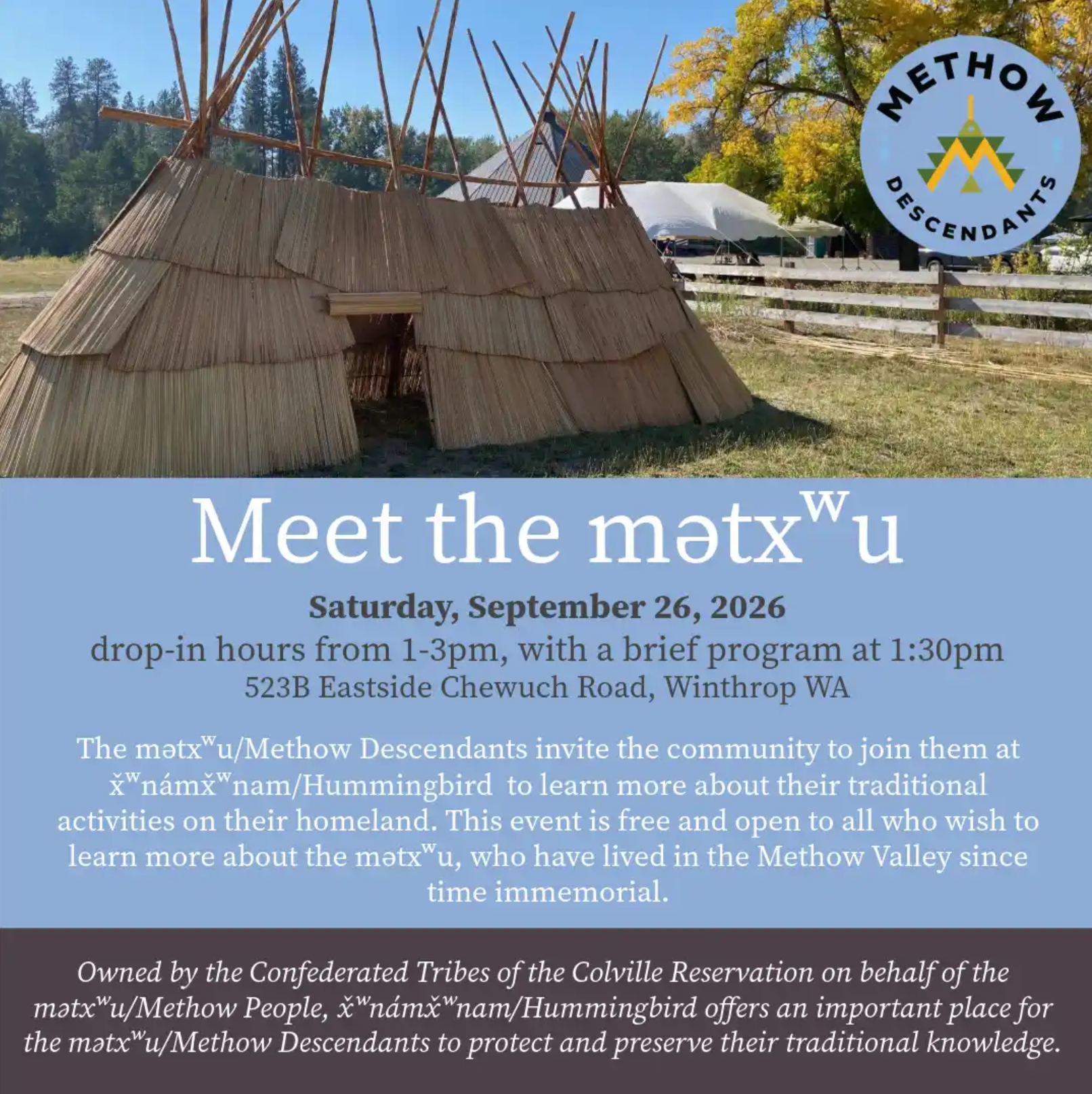
Meet the mətxʷu
The mətxʷu/Methow Descendants invite the community to join them at x̌ʷnámx̌ʷnam (Hummingbird) to learn about their traditional activities on their homeland. This event is free and open to all who wish to learn more about the mətxʷu, who have lived in the Methow Valley since time immemorial.
Drop in hours are 1-3pm, with a brief program at 1:30pm
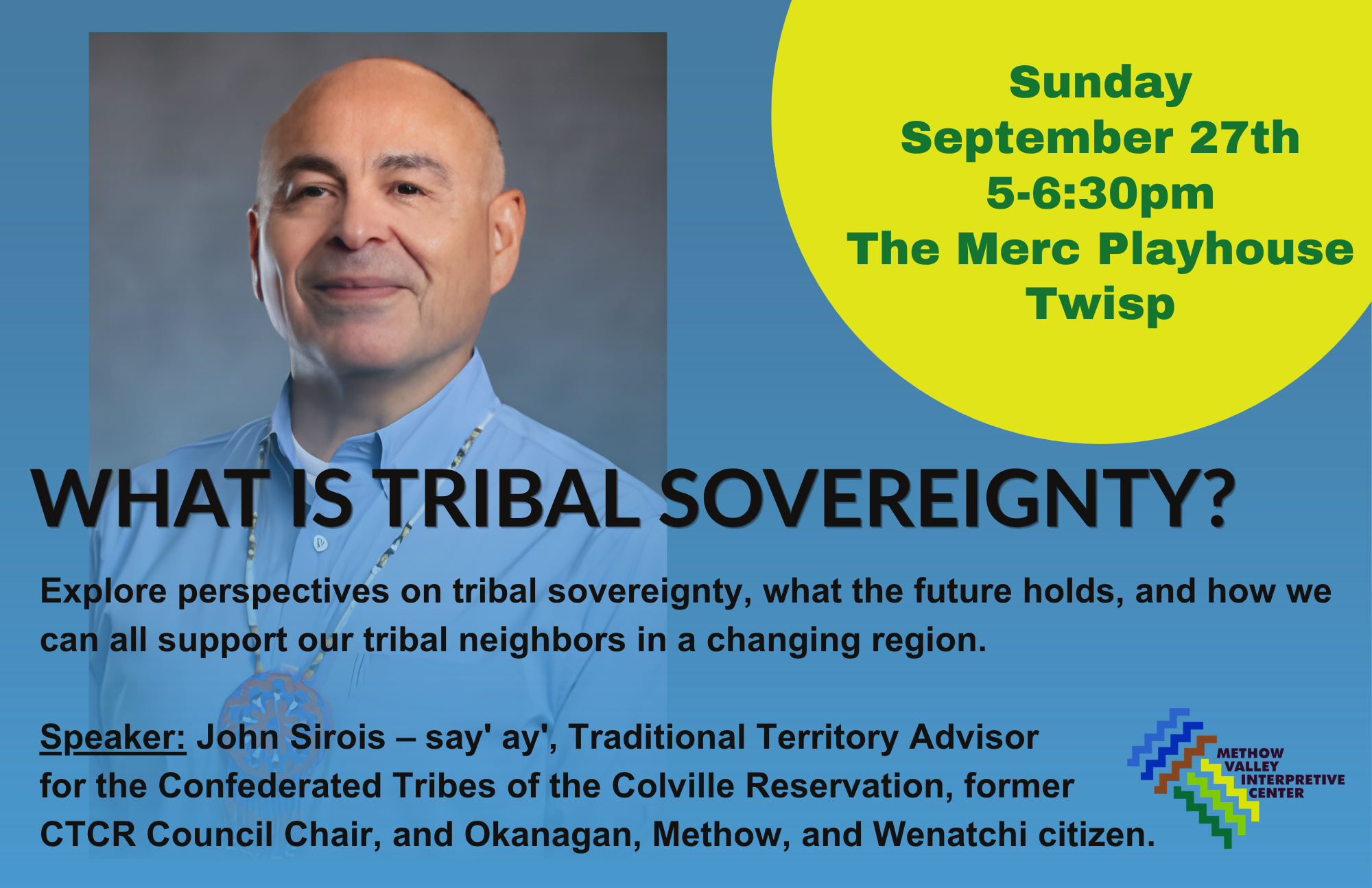
What is Tribal Sovereignty?
John Sirois – say' ay' (pronounced Sigh Eye) is an Okanagan, Methow, and Wenatchi citizen of the Confederated Tribes of the Colville Reservation (CTCR), raised in Omak, WA. Grounded in cultural teachings passed down from his family, he holds degrees from Dartmouth College and the University of Washington. Over a 20-year career with CTCR (including service as Council Chair), John has led initiatives in land stewardship, cultural preservation, and economic development, and currently serves as the Traditional Territory Advisor advocating for Indigenous rights across ancestral lands. An avid fisherman, hunter, and outdoorsman, he works to build a sustainable future for coming generations.
Join us at The Merc Playhouse as John shares his perspective on tribal sovereignty, what the future holds, and how we can all support our tribal neighbors.
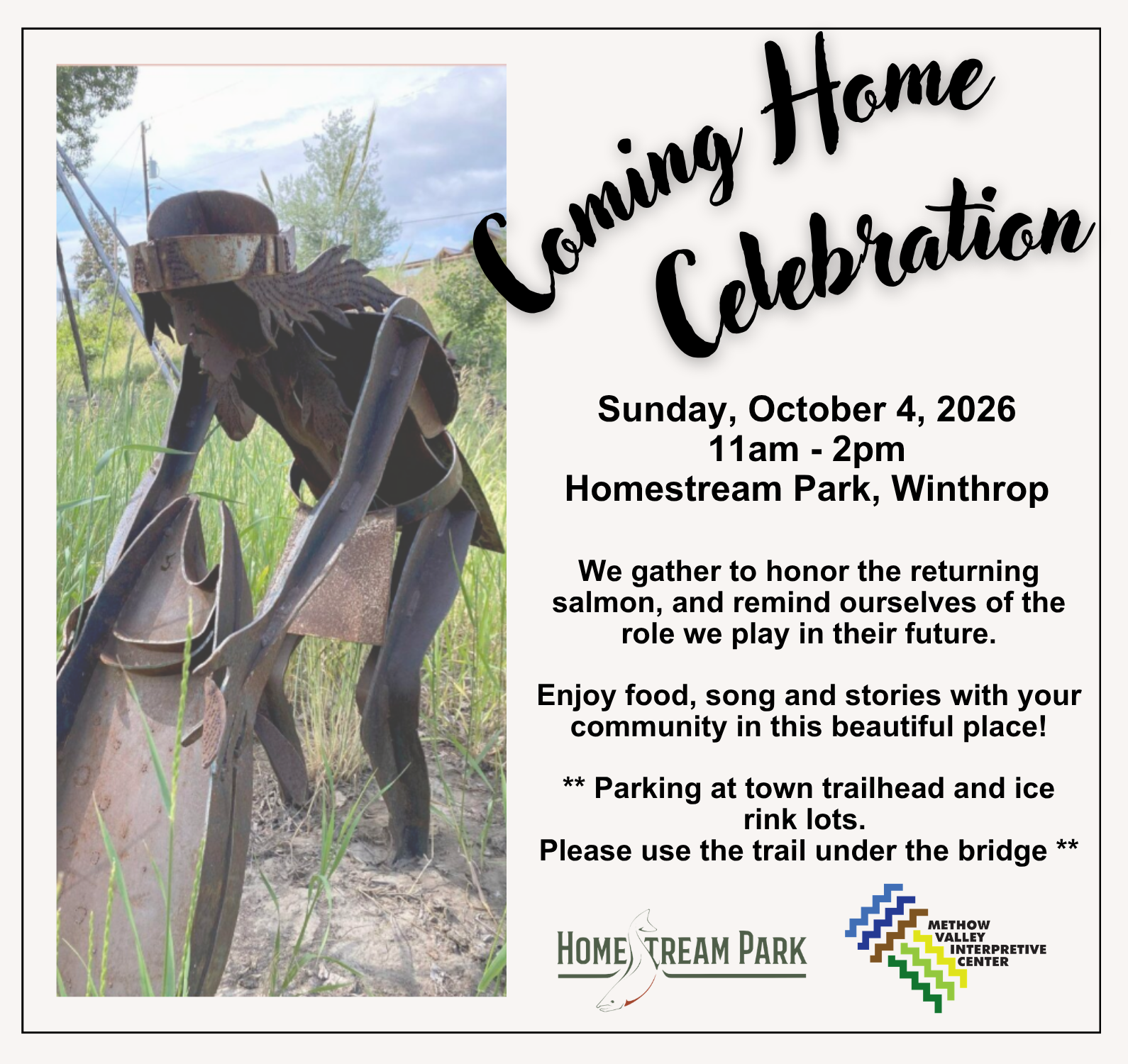
Coming Home Celebration at Homestream Park
Our Annual Coming Home Celebration at Homestream Park will be Sunday October 4, 2026 from 11am to 2pm!
This free, family-friendly event normally features live music, food, and community gathering along the Methow River. Together, we’ll honor the salmon and the cultural and ecological connections they represent.
Bring your family and friends, enjoy being with your community in the park, and join us in celebrating the salmon’s journey home.
Please note that parking for this event is at the Winthrop town trailhead or ice rink lots. Please look for signage and use the trail under the bridge to access the park.
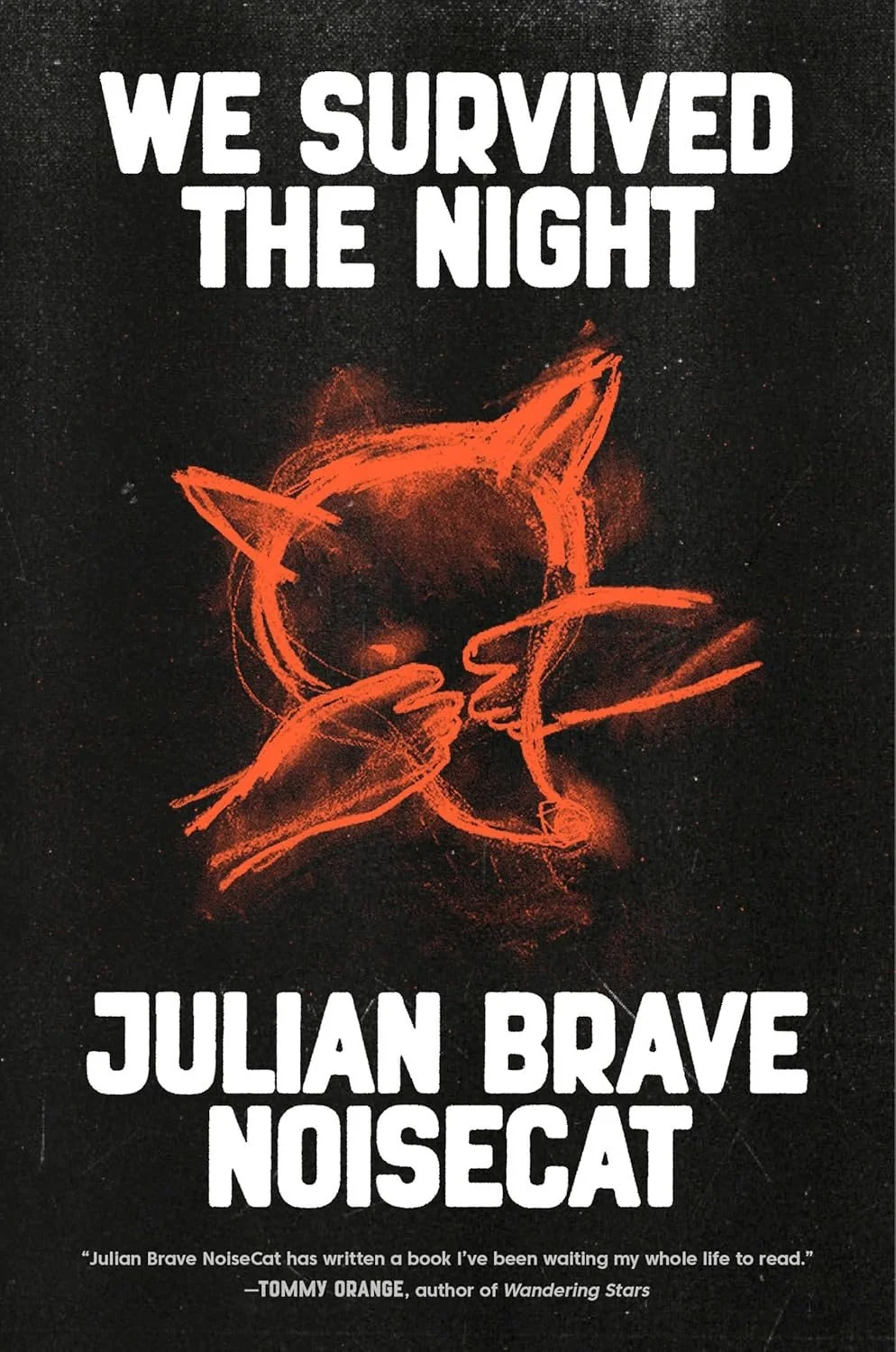
Next Book Club Meeting: We Survived the Night
Next book group: Thursday September 3rd from 5:00 - 7:00 pm at the Methow Valley Interpretive Center.
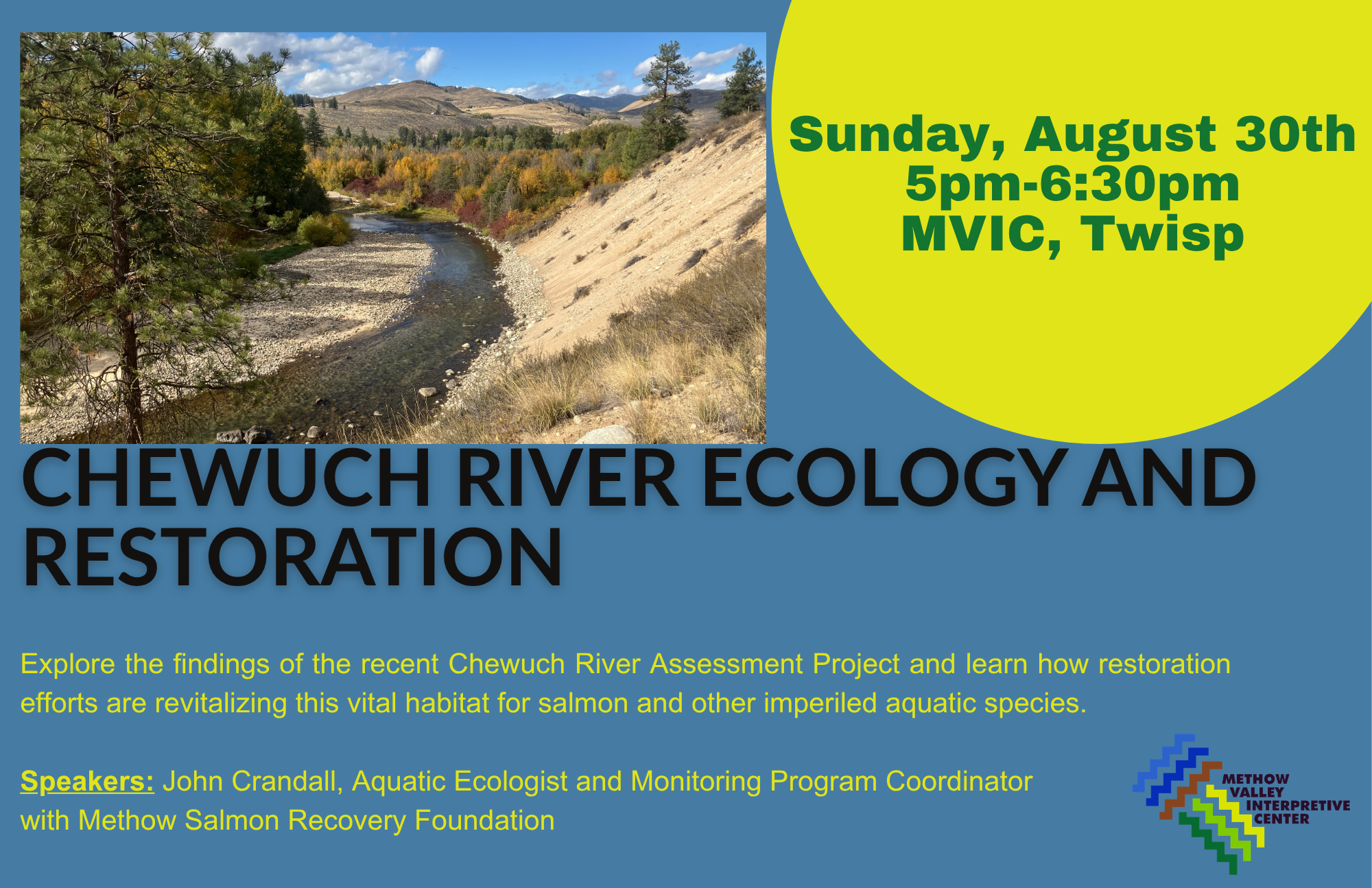
Chewuch River Ecology and Restoration
The Chewuch River is a primary tributary stream to the Methow River and a vital stronghold for several imperiled aquatic species including spring chinook salmon, steelhead, bull trout, Pacific lamprey, and several species of freshwater mollusks. Habitat conditions in the Chewuch have deteriorated over time from a variety of sources and work is underway to address these impairments and support the evolution and return of the watershed into a more vibrant and self-sustaining ecosystem. Come learn about the recent Chewuch River Assessment Project and what it reveals about this beloved waterscape.
Meet the speaker: John Crandall is the Aquatic Ecologist and Monitoring Program Coordinator for the Methow Salmon Recovery Foundation
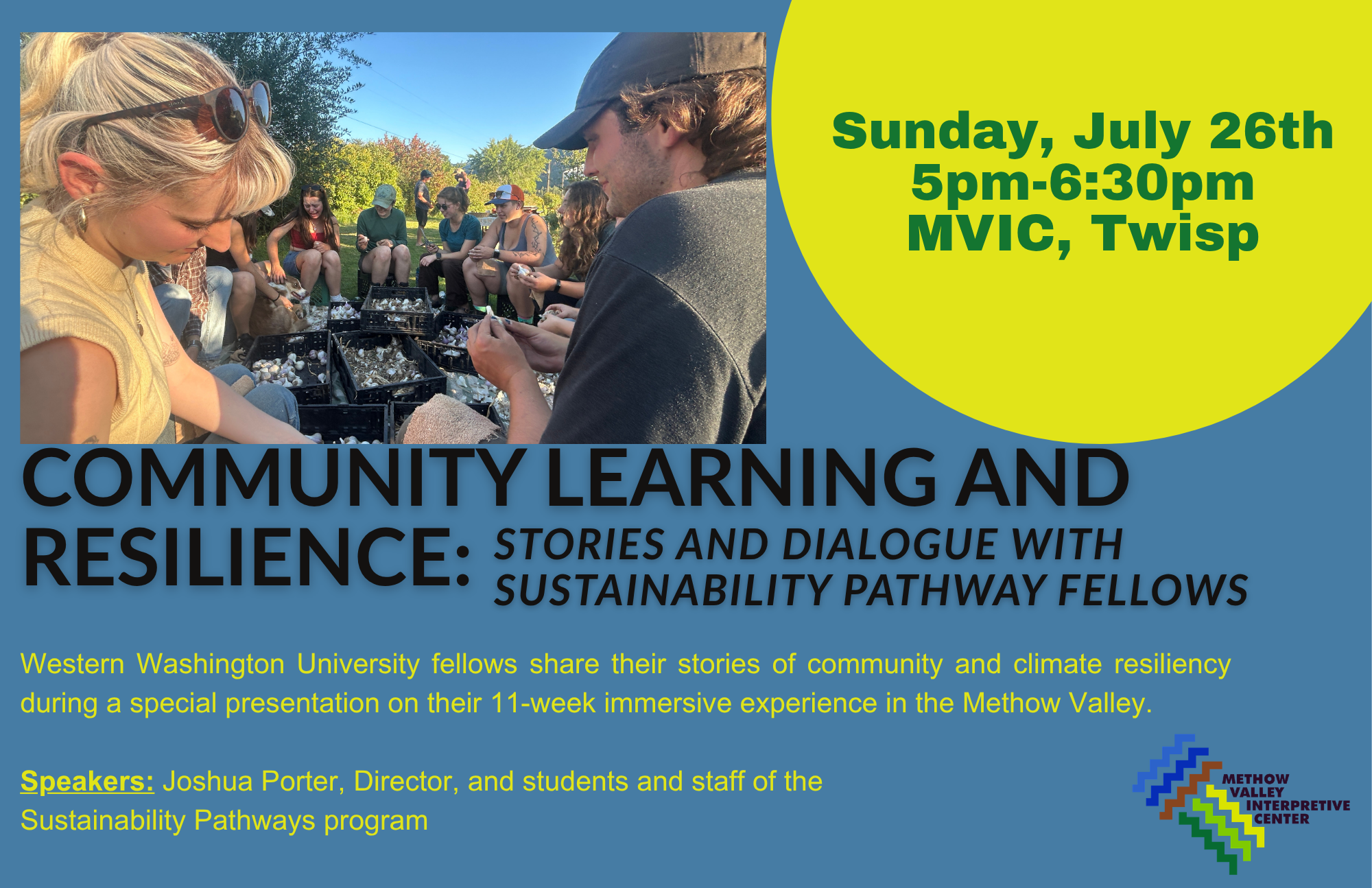
Community Learning and Resilience: Stories and Dialogue with Sustainability Pathway Fellows
Join Methow Valley Interpretive Center and undergraduate students from Western Washington University's Sustainability Pathways program to hear about their experiences engaging in community, ecological, and climate resiliency this Summer. Members of this year's cohort will share how their 11-week immersive fellowships engaged the Vital Conditions for Health and Well Being, and invite the audience into dialogue about place, resiliency, and belonging.
Students and staff will facilitate, including Sustainability Pathways Director, Joshua Porter, who is based in the Methow and created the program in 2020 inspired by the formative experiences he had in the valley in his early 20s.
For more information:
Sustainability Pathways: https://cenv.wwu.edu/sp/home-page
Vital Conditions for Health and Well Being: https://www.thrivingtogether.org/vital-conditions
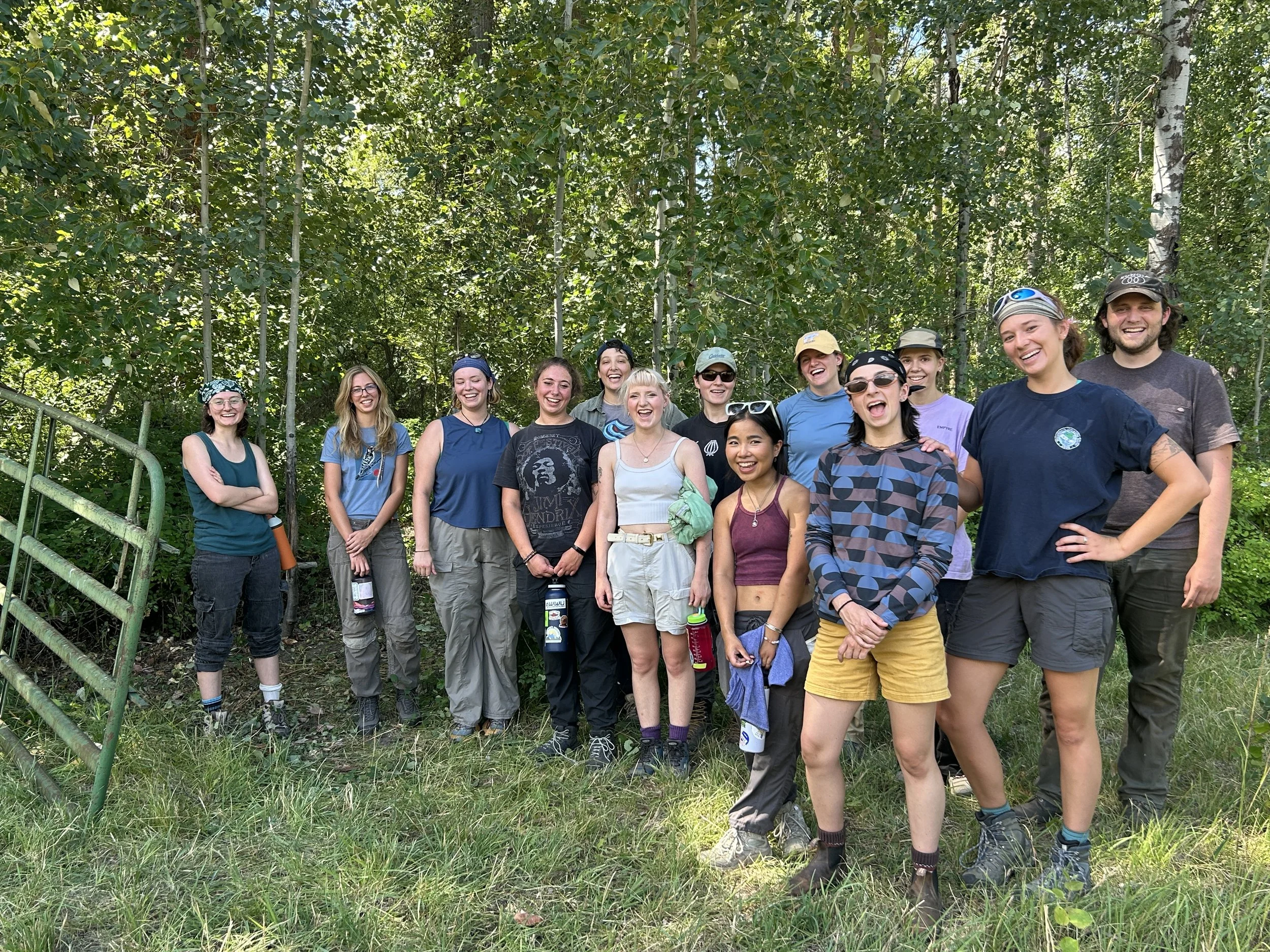
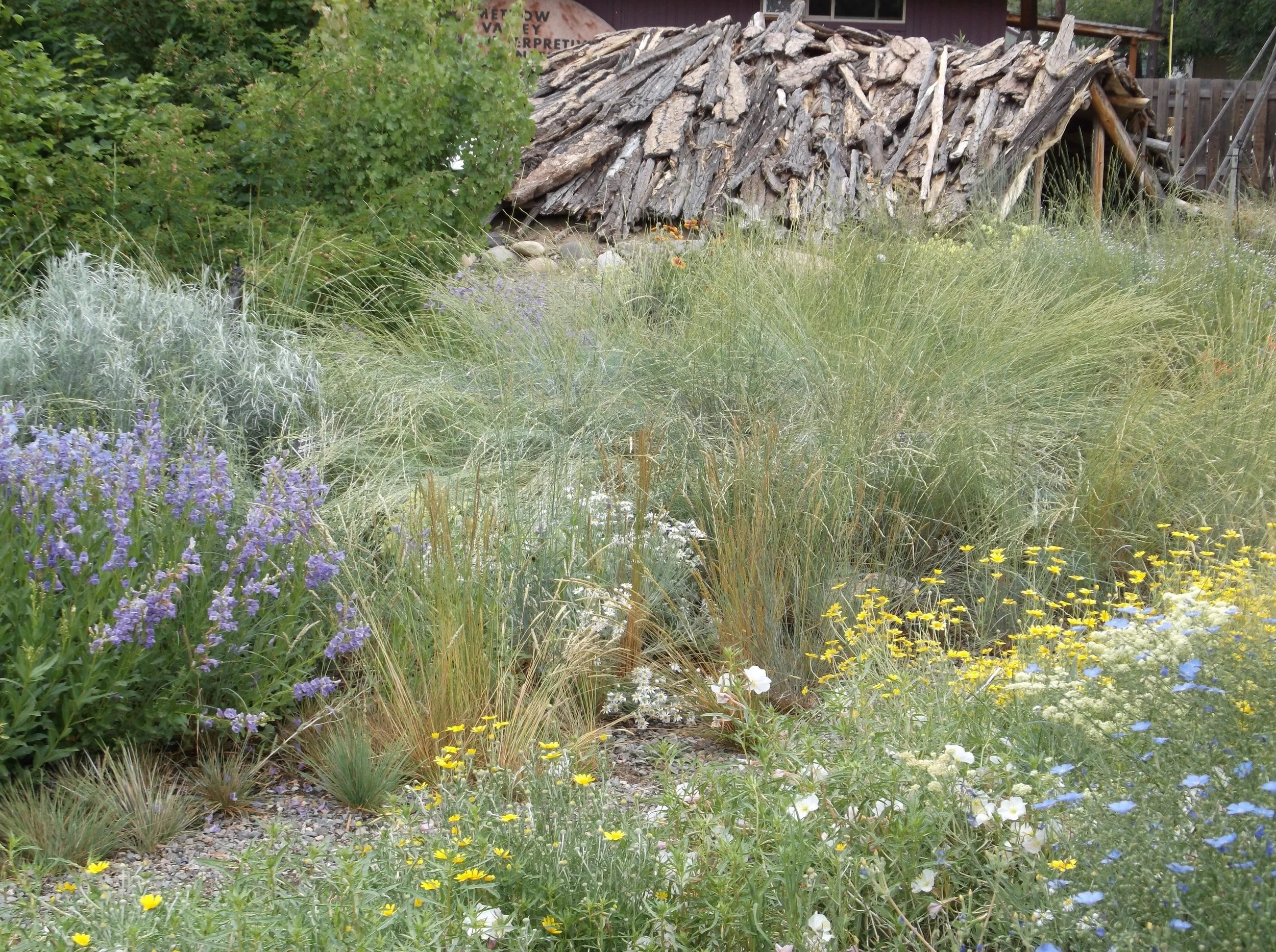
ON HOLD - Native Garden Work Party!
Our Native Garden Work Parties are taking a break for July and August because we’re anticipating it’ll just be too hot to be working outside. We will resume again in the fall!
Serviceberry Gathering and Celebration
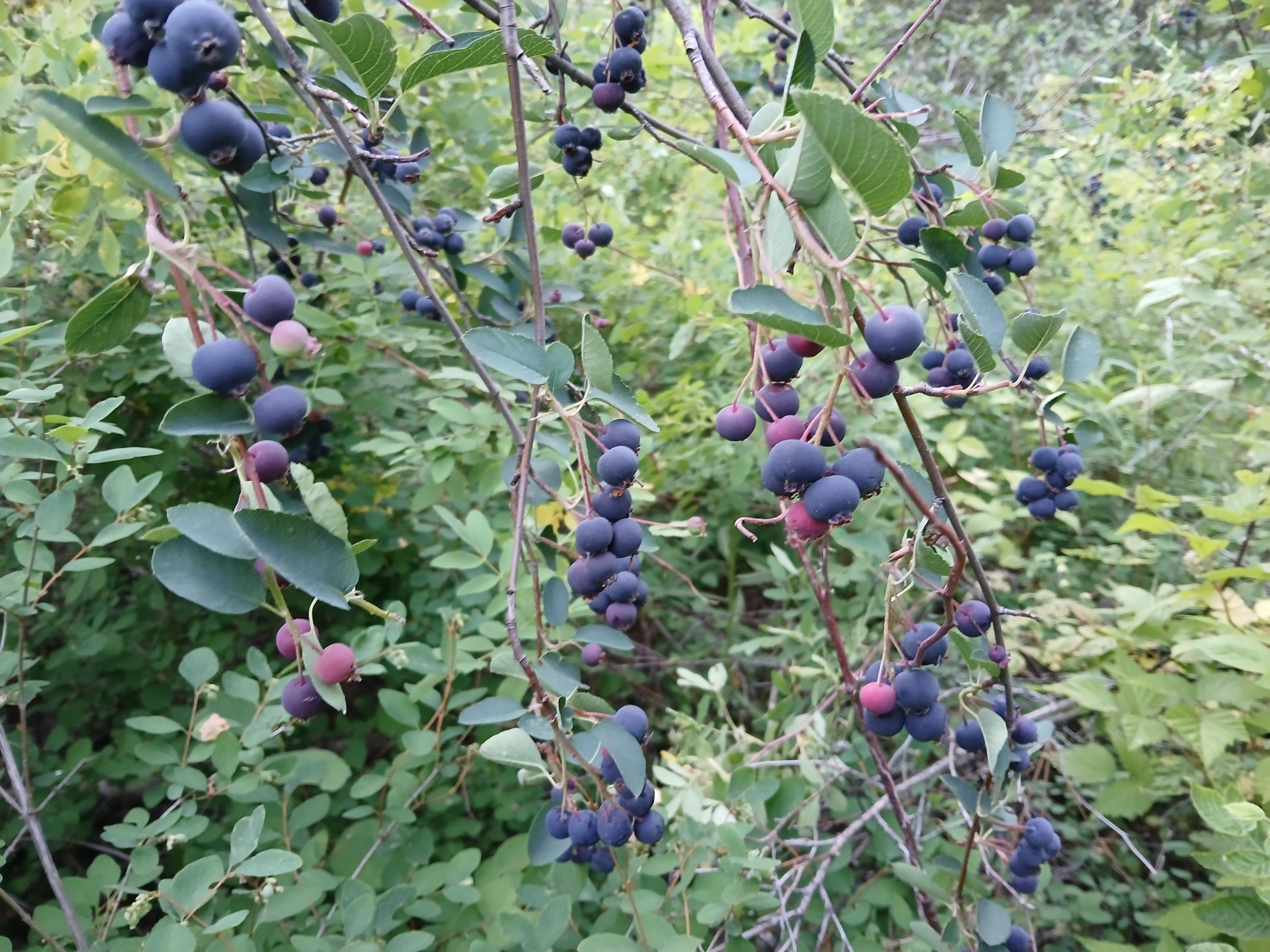
Summer is in full swing, and serviceberries will soon be reaching peak ripeness across the valley! Because they ripen and dry out quickly in the summer heat, soon it'll be time to head out and harvest. This month is known as ksiyaʔtn (Time of Serviceberry) in nsəlxcin, the Indigenous language of this place, marking the traditional season to gather this vital First Food.
We invite you to join the Methow Valley Interpretive Center in collecting a bountiful harvest of serviceberries to share with the Native community later this year. Known as siyaʔ in nsəlxcin, the serviceberry is a sacred food to the Methow People. Alongside Deerr, Chinook, and Bitterroot, siyaʔ is one of the four Food Chiefs, holding a foundational place in traditional culture. The Methow Valley is historically renowned for both the quality and abundance of its siyaʔ. Taking the time to harvest and prepare this gift is a meaningful way to practice reciprocity and restore relationships with the land and Native Peoples. The gathered berries will be used for First Foods ceremonies, educational programs, and as gifts for Methow elders.
Serviceberry Drop-Off and Celebration with Methow People
Saturday, July 18th, 11:00 AM - 1:00 PM
Methow Valley Interpretive Center
Gather Serviceberries ➔ Dry or Refrigerate ➔ Bring Them to MVIC!
Join us at the center to celebrate the harvest! We will have dried serviceberries for you to sample, dehydrators running, and a BBQ grill fired up. Bring something to throw on the grill or a side dish to share if you'd like!
How to Prepare Your Berries: Our vision is for community members to head out, offer thanks to this beautiful landscape, and harvest a shared bounty of siyaʔ.
Preferred Method: Please dry your berries at home before bringing them in.
Second Option: Keep them fresh in the fridge.
Can't dry them? No problem! Bring your berries to the gathering on July 18th (or drop them off afterward by appointment), and we will dehydrate them for you.
Please note: We ask that you avoid freezing the berries this year, using this method only as an absolute last resort.
A Note on Biodiversity: Did you know there are between 5 and 9 different nsəlxcin names for what we call the serviceberry or saskatoon? These distinct names reflect the plant's incredible diversity. As you harvest, pay close attention: Are the bushes tall or short? Are the berries deeply sweet or mild? Do they dry easily?
🏷️ Important: Please remember to label your jar or bag with the specific location where you gathered them. Knowing their origin helps us honor and track the valley's distinct berry varieties.
To coordinate a drop-off or ask questions, contact us at mvinterpretivecenter@gmail.com. Happy gathering!
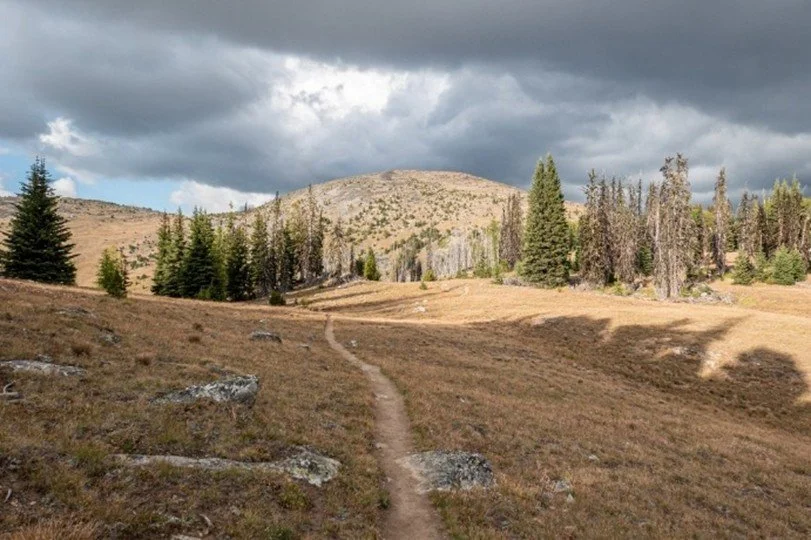
Tiffany Mountain Hike with Peter Neitlich
Come hike Tiffany Mountain with retired NPS Ecologist/Lichenologist Peter Neitlich.
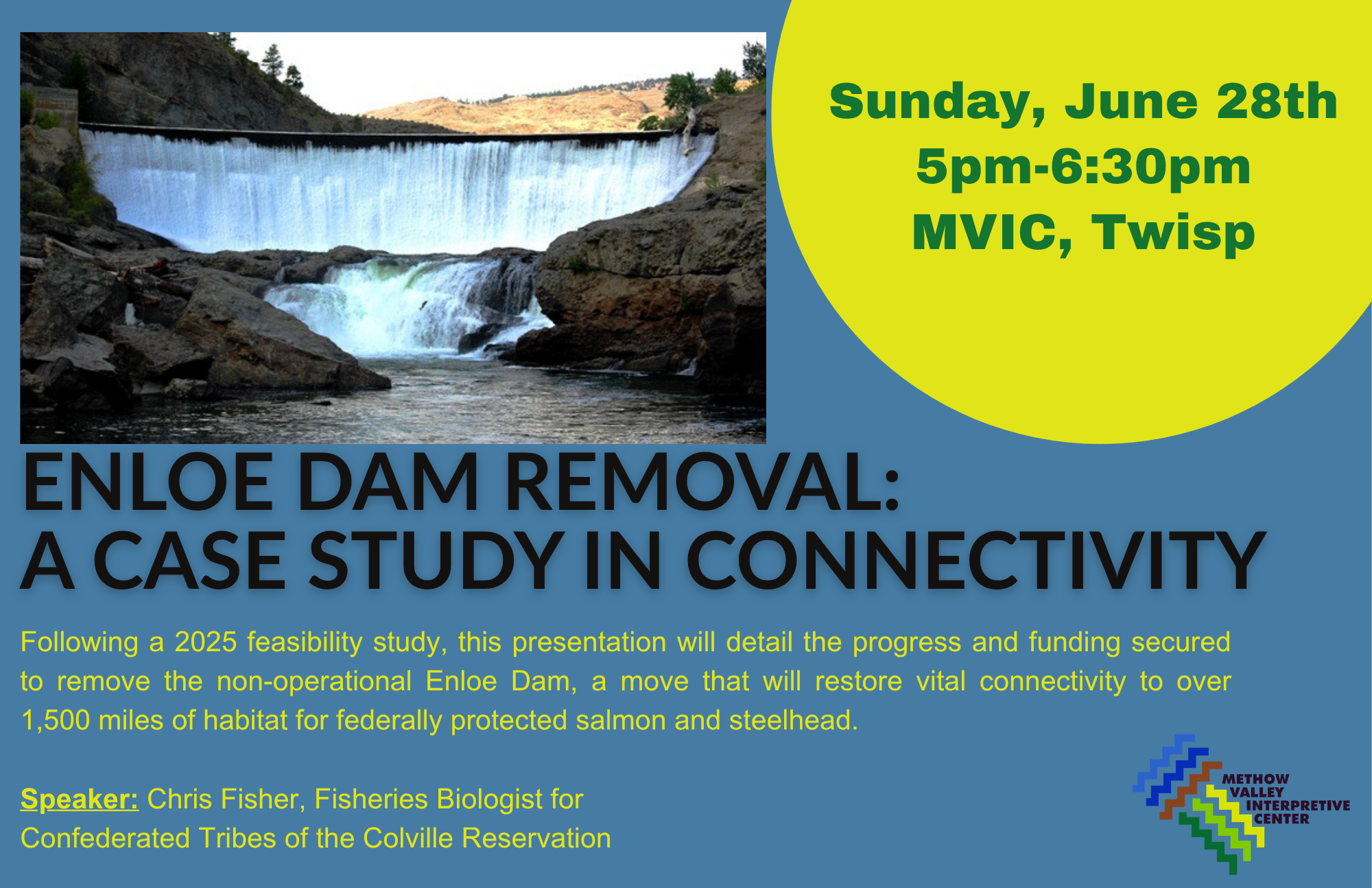
Enloe Dam Removal: A Case Study in Connectivity
Join us for an in-depth look at the future of the Similkameen River as we explore the historic effort to remove the Enloe Dam. Since its construction in 1923, this non-operational structure has blocked vital fish passage and disrupted the natural flow of nutrients and sediment.
Following a landmark 2025 feasibility study funded by the Bipartisan Infrastructure Law, experts have determined that dam removal is not only possible but can be achieved with minimal sediment removal. This presentation will cover:
The Findings: Insights from the technical, financial, and risk assessments that paved the way for removal.
The Impact: How reconnecting the river will open 1,520 miles of spawning and rearing habitat for federally listed Steelhead and Spring Chinook salmon.
Next Steps: A look at the current design progress, supported by the National Fish Passage Program, as the project moves toward a free-flowing river.
Come learn how this significant restoration project is set to revitalize the Similkameen River Basin for generations to come.
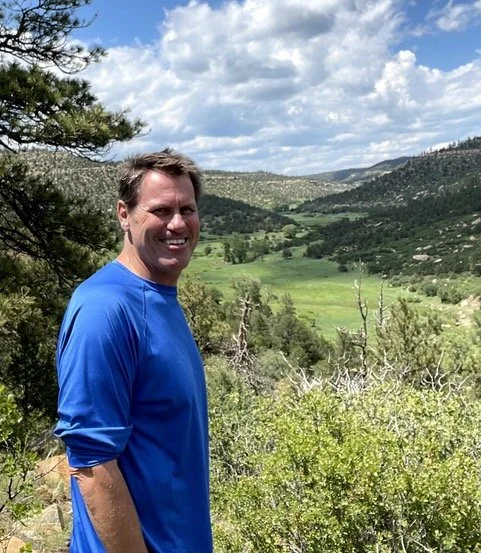
Meet the Speaker: Chris Fisher is a fisheries biologist who has been employed by the Confederated Tribes of the Colville Reservation for nearly 30 years. He is a native of Michigan but has lived in Washington since 1996.After completing a 4-year commitment in the United States Air Force he enrolled at the University of Georgia, where he earned a degree in Forest Resources, with a minor in fisheries management. He then earned a Master’s Degree in Fisheries Science from the South Dakota State University. He has worked for the Idaho Fish & Game and the U.S. Forest Service prior to his employment with the Colville Tribes. Chris has been involved in the evaluation of Enloe Dam, at some level, over the past decade and is here today to summarize recent history, results of the sediment sampling, fish navigation and the conclusion of a two year feasibility study.
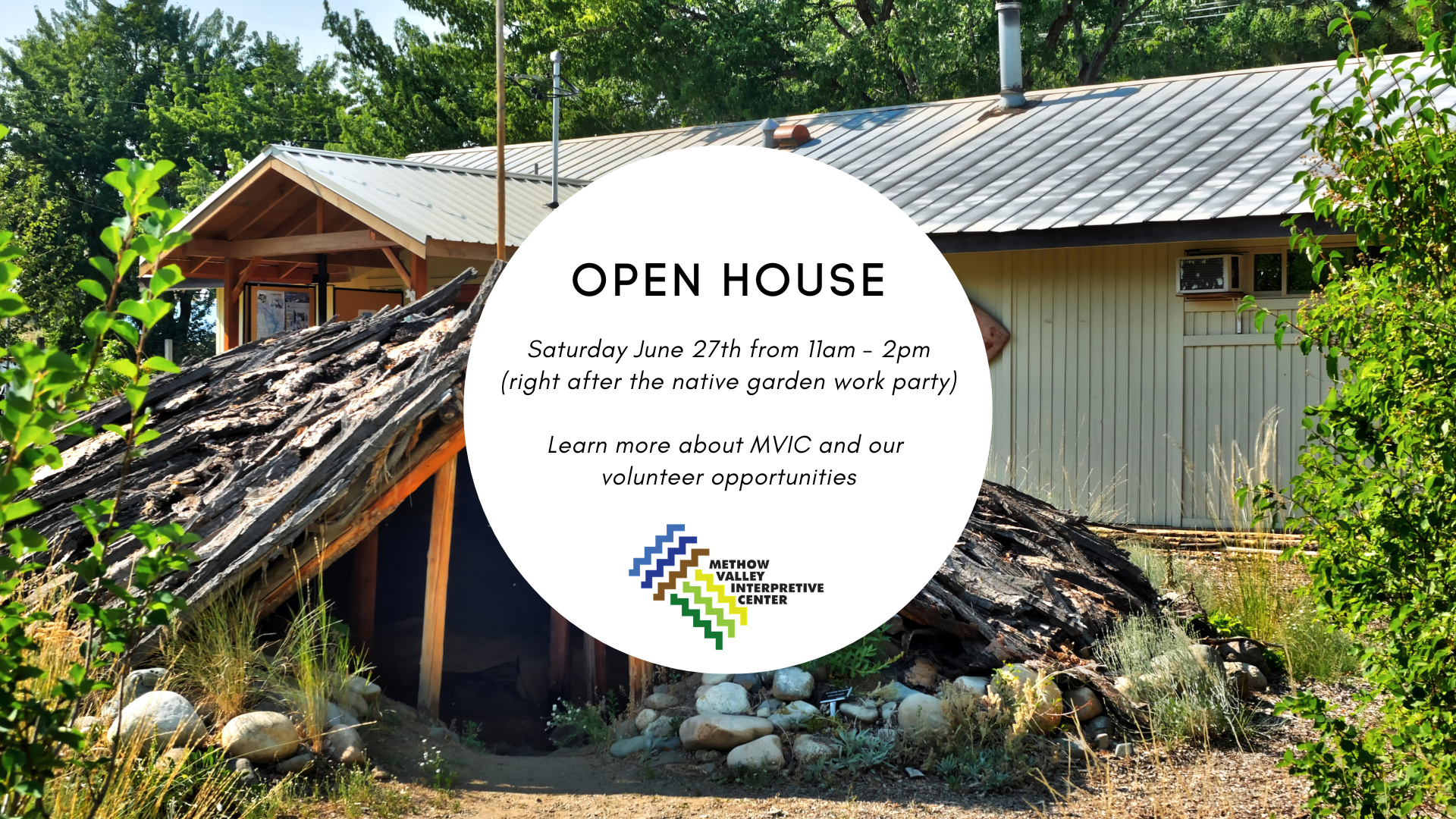
Open House
Happening right after the native garden work party!
Learn more about MVIC and our volunteer opportunities.
Native Garden Work Party!
Last Saturday of every month @ 9:00 - 11:00 AM at the
Methow Valley Interpretive Center's Native Garden.
We'll see you there!
Sign up HERE or simply show up; please bring gardening gloves if you have them.
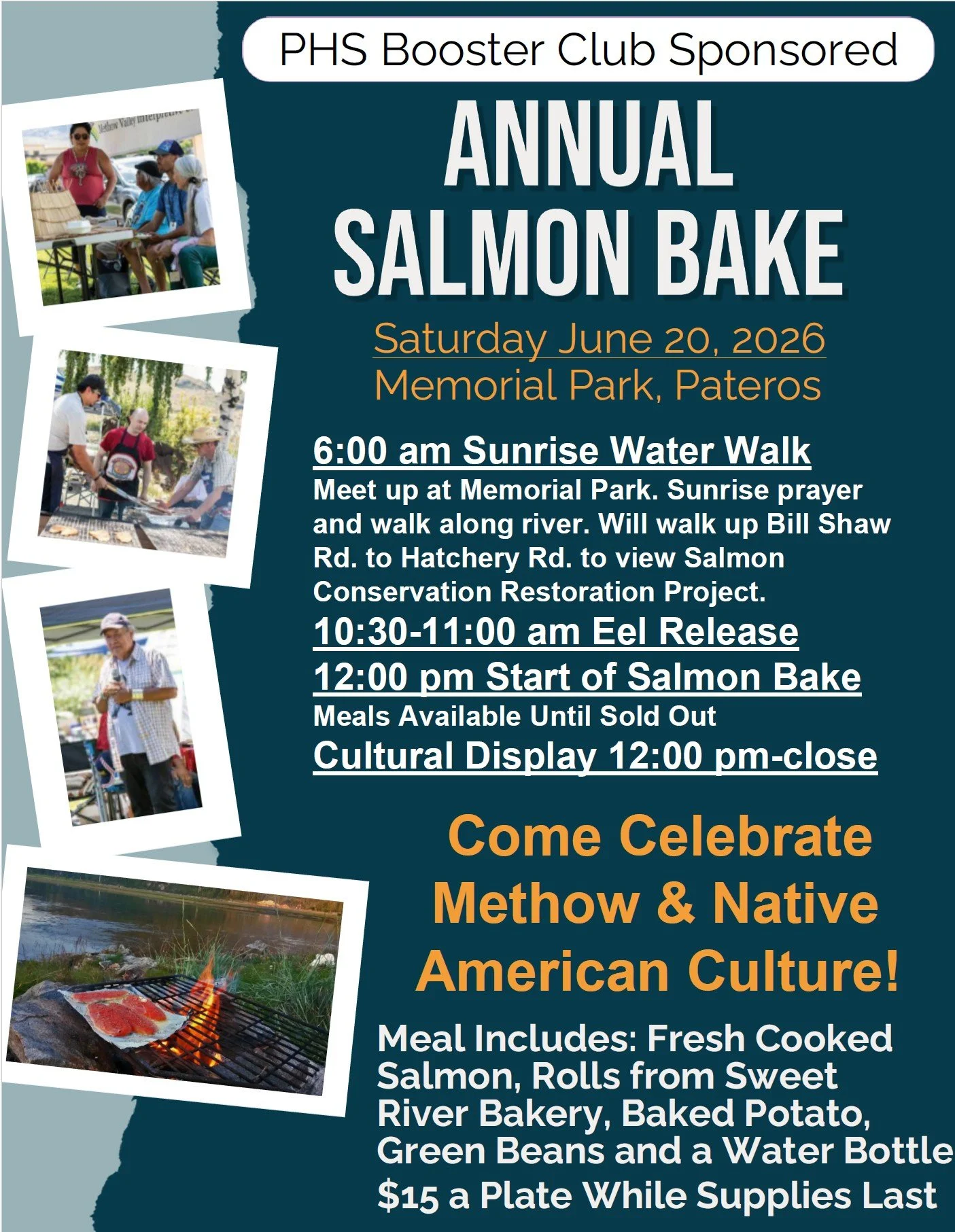
Pateros Salmon Bake
Come on down to Pateros to celebrate Methow and Native American Cultural at the Annual Salmon Bake at Memorial Park! This event is sponsored by the Pateros High School Booster Club.
Meals are $15 and are available until sold out. They include fresh cooked salmon, rolls from Sweet River Bakery, baked potato, green beans and a water bottle.
Also happening the same morning:
6 am Sunrise Water Walk: Meet up at Memorial Park. Sunrise prayer and walk along river. Will walk up Bill Shaw Rd to Hatchery Rd to view Salmon Conservation Restoration Project.
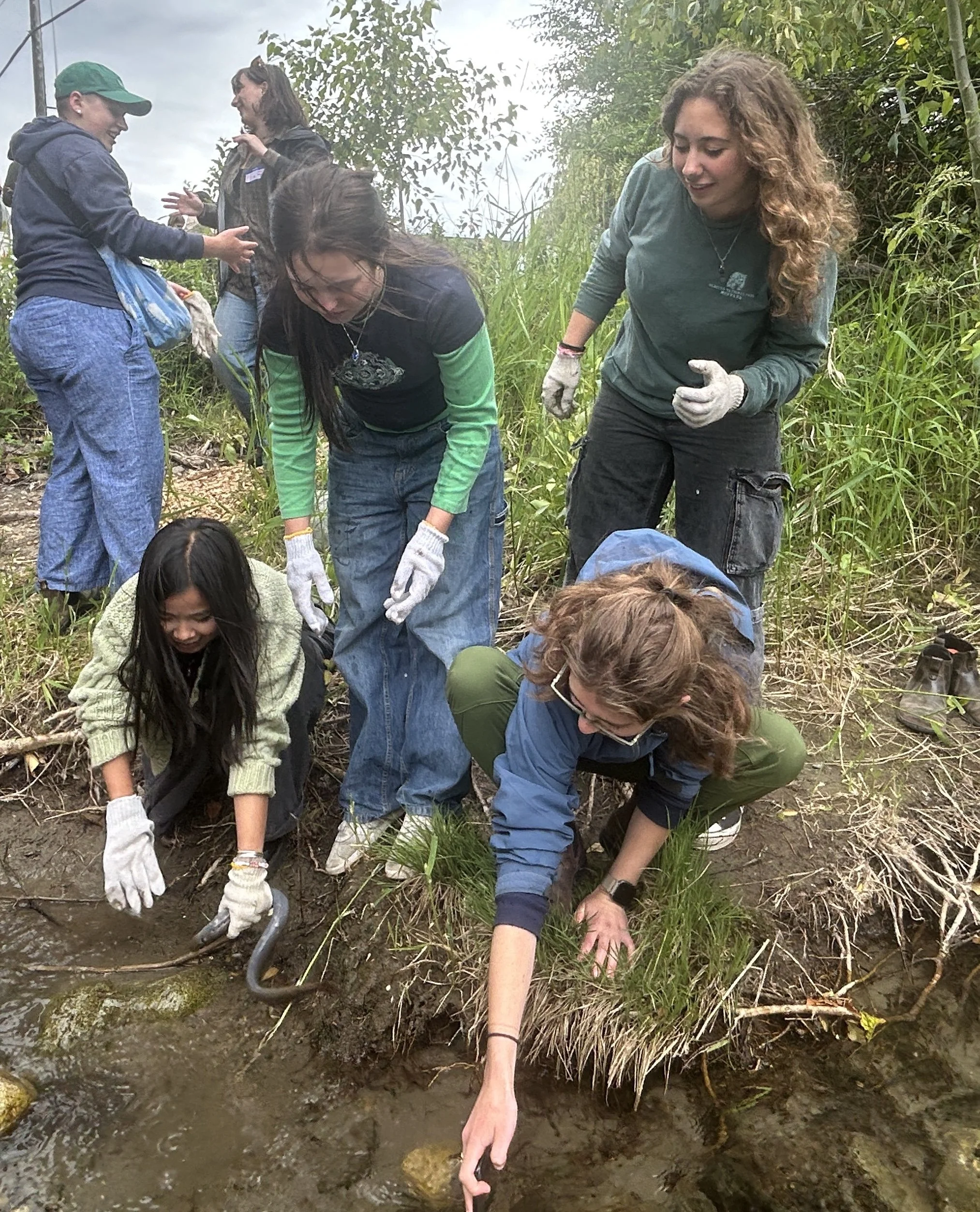
10:30 - 11 am: Eel release
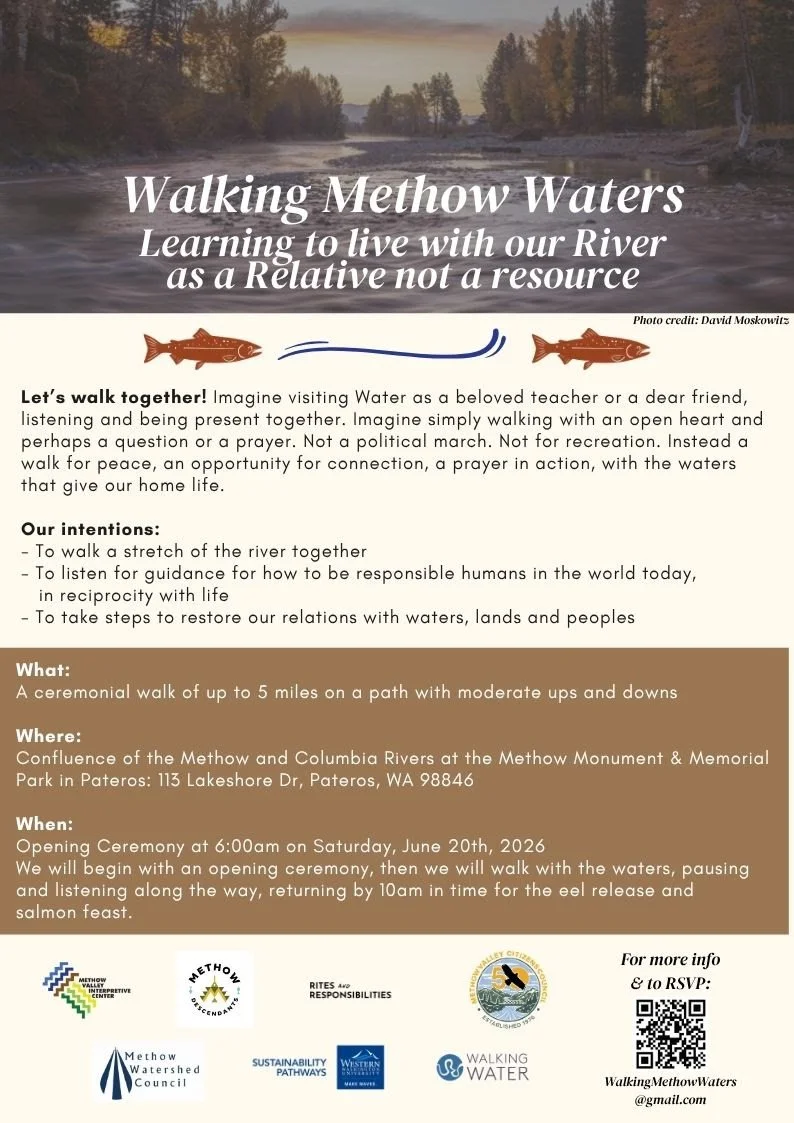
Walking Methow Waters
Join a ceremonial walk of up to 5 miles on a path with moderate ups and downs. This is not a walk for recreation or a political walk, but a walk for peace and and opportunity for connection with the waters that give us life.
Meet at the confluence of the Methow and Columbia Rivers at the Methow Monument and Memorial Park in Pateros, 113 Lakeshore Drive. We will return by 10 am in time for the eel release and salmon bake.
For more info and to RSVP, email WalkingMethowWater@gmail.com
Summer Book Club
JOIN US FOR A SUMMER BOOK GROUP!
Register here: https://forms.gle/wR99HhP5LuFASzTP6
Facilitated by Rob Crandall
Starting June 18 at 6:00 p.m,
we will meet monthly (four times) at the Methow Valley Interpretive Center
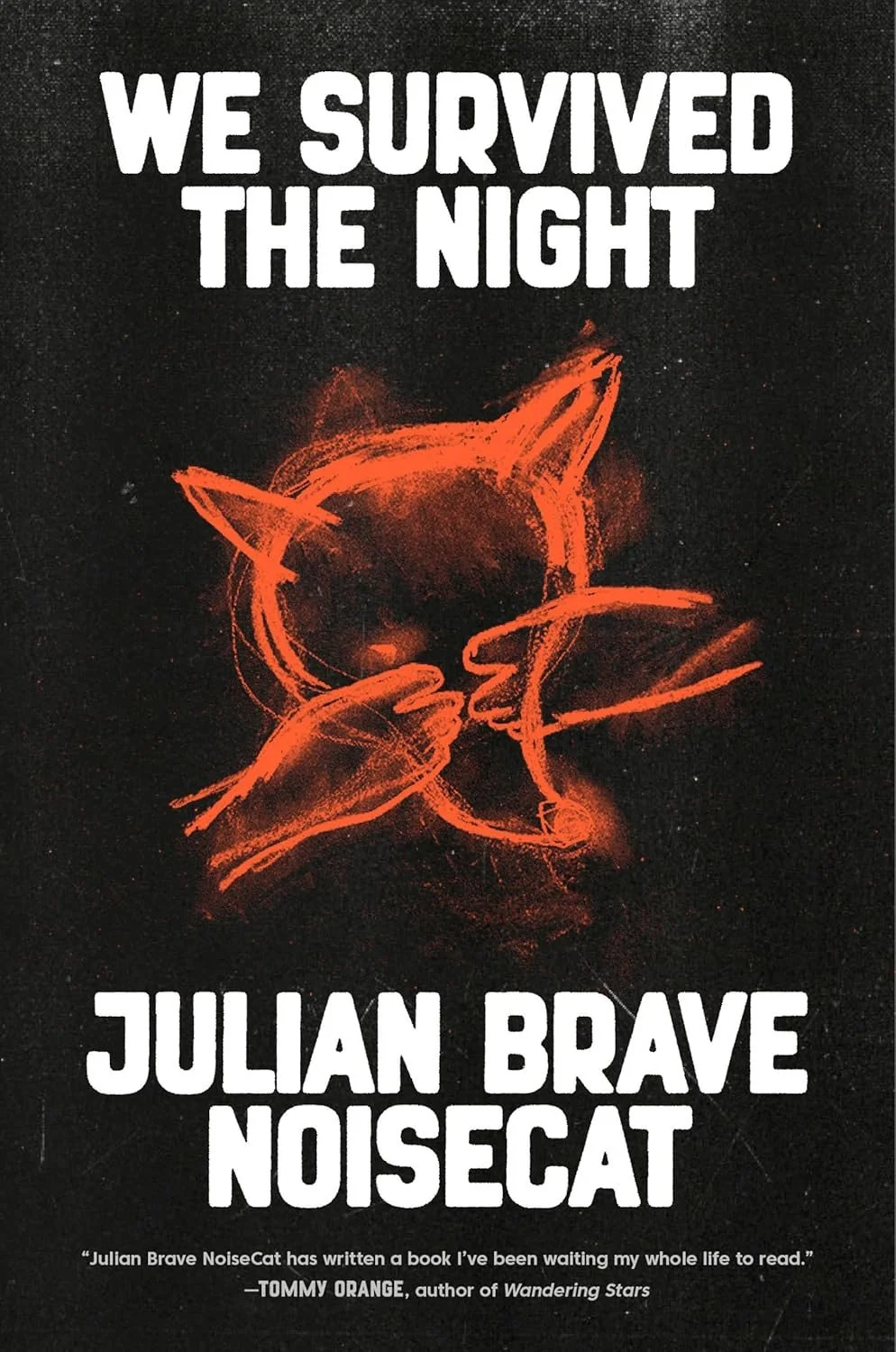
Book: We Survived The Night by Julian Brave NoiseCat
Join us in a deep dive into this extraordinary book as we grow our understanding of what it means to live in the lands of the Coyote People. You don't have to register for the group, please just show up! And no need to have read the entire book before the first meeting. We will unpack sections of the book together over four monthly meeting times.
Book Summary: A stunning narrative from one of the most powerful young writers at work today--We Survived the Night interweaves oral history with hard-hitting journalism and a deeply personal father-son journey into a searing portrait of Indigenous survival, love, and resurgence. Told in the style of a "Coyote Story," a legend about the trickster forefather of NoiseCat's people who was revered for his wit and mocked for his tendency to self-destruct, We Survived the Night brings a traditional artform nearly annihilated by colonization back to life on the page. Through a dazzling blend of history and mythology, memoir and reportage, NoiseCat unravels old stories and braids together new ones.
Get your book at Trails End Bookstore in Winthrop or online.
Homestream Park Work Party
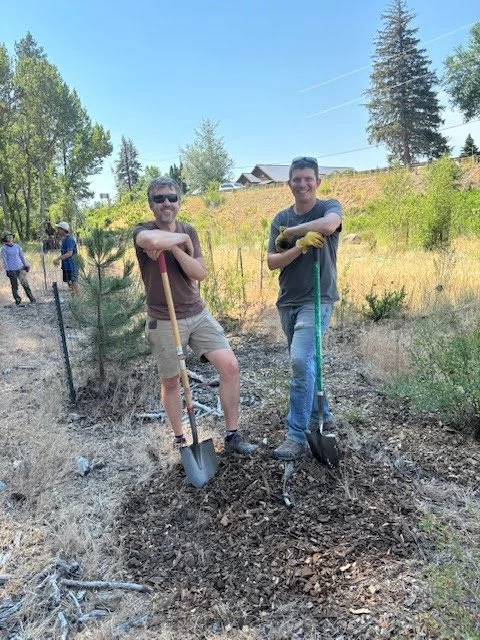
The Methow Valley Interpretive Center together with the Methow Conservancy are committed to hosting stewardship parties on the 1st, 2nd and 3rd Thursdays of each month, and you are invited to join the team! Our goal this time is to move mulch to suppress invasives and support natives. Let's do this together!
Homestream Park is owned and stewarded by the Methow Valley Interpretive Center in partnership with the Methow Descendants, Methow Conservancy, Little Star School, and other community members.
Register HERE or email Daniel Senner at Daniel@methowconservancy.org
Parking:
If you are driving and able to walk from the Winthrop Town Trailhead, please park there and use the trail under the bridge.
If you are unable to walk from the Town Trailhead there is limited parking is available at the park.
Please do not park at the Fainting Goat as we are trying to be good neighbors.
What to bring:
Please bring your work gloves and water. We have the basics, but if you are able, bring your trusted tools.
Homestream Park Work Party
The Methow Valley Interpretive Center together with the Methow Conservancy are committed to hosting stewardship parties on the 1st, 2nd and 3rd Thursdays of each month, and you are invited to join the team! Our goal this time is to move mulch to suppress invasives and support natives. Let's do this together!
Homestream Park is owned and stewarded by the Methow Valley Interpretive Center in partnership with the Methow Descendants, Methow Conservancy, Little Star School, and other community members.
Register HERE or email David LaFever at mvinterpretivecenter@gmail.com
Parking:
If you are driving and able to walk from the Winthrop Town Trailhead, please park there and use the trail under the bridge.
If you are unable to walk from the Town Trailhead there is limited parking is available at the park.
Please do not park at the Fainting Goat as we are trying to be good neighbors.
What to bring:
Please bring your work gloves and water. We have the basics, but if you are able, bring your trusted tools.
Homestream Park Work Party
The Methow Valley Interpretive Center together with the Methow Conservancy are committed to hosting stewardship parties on the 1st, 2nd and 3rd Thursdays of each month, and you are invited to join the team! Our goal this time is to move mulch to suppress invasives and support natives. Let's do this together!
Homestream Park is owned and stewarded by the Methow Valley Interpretive Center in partnership with the Methow Descendants, Methow Conservancy, Little Star School, and other community members.
Register HERE or email David LaFever at mvinterpretivecenter@gmail.com
Parking:
If you are driving and able to walk from the Winthrop Town Trailhead, please park there and use the trail under the bridge.
If you are unable to walk from the Town Trailhead there is limited parking is available at the park.
Please do not park at the Fainting Goat as we are trying to be good neighbors.
What to bring:
Please bring your work gloves and water. We have the basics, but if you are able, bring your trusted tools.
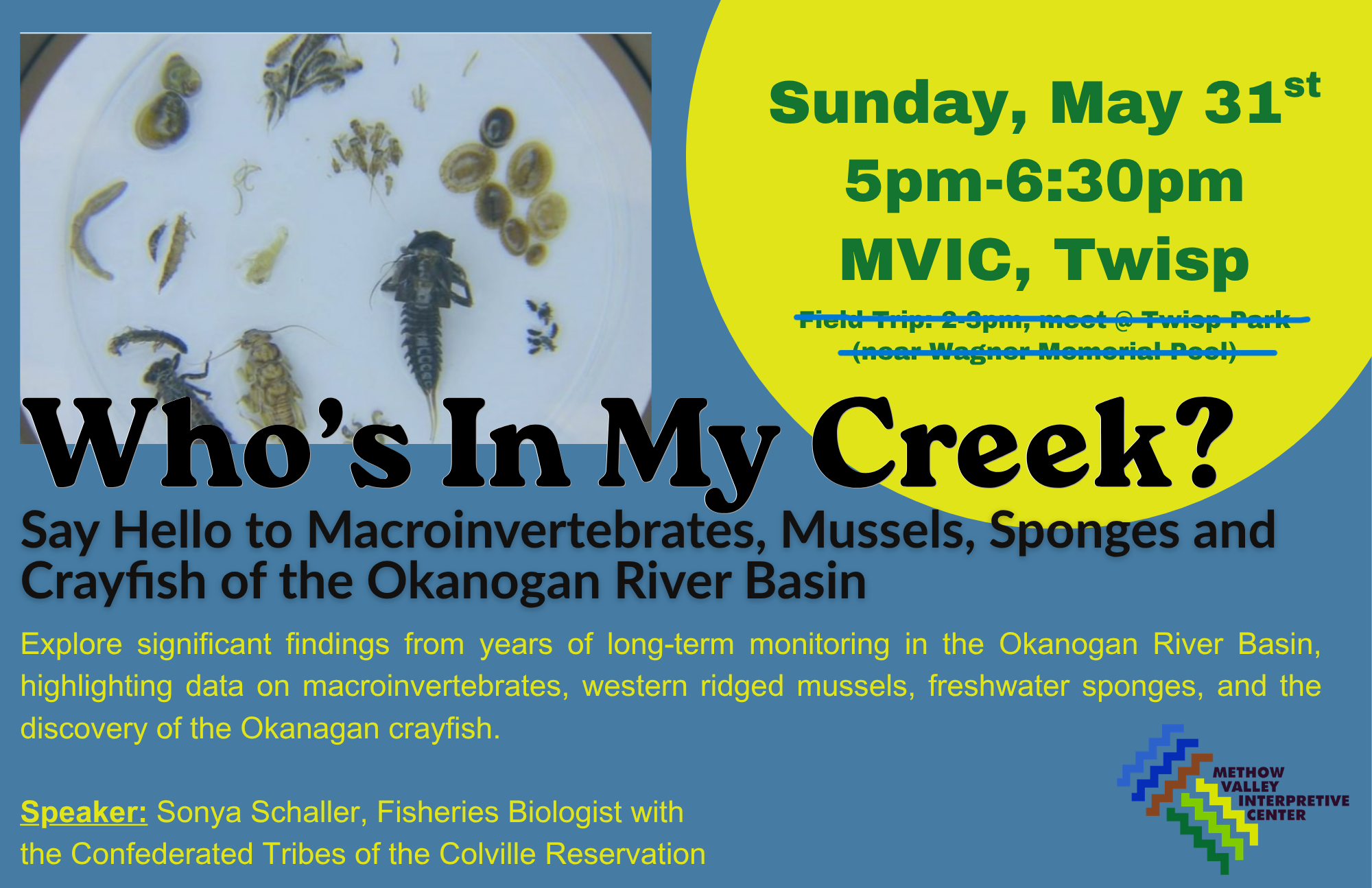
Who's In My Creek? Say Hello to Macroinvertebrates, Mussels, Sponges and Crayfish of the Okanogan River Basin
The field crew at the Okanogan Basin Monitoring and Evaluation Program (OBMEP) has been collecting macroinvertebrate samples in the Okanogan River and its tributaries since 2009 and snorkeling the river since 2004. Sonya will discuss some interesting findings from the macroinvertebrate data over the years and she will discuss the population of western ridged mussels in the Okanogan River. She will introduce the new species of crayfish called the Okanogan crayfish and will show some GoPro footage from snorkel surveys of freshwater sponges.
Field Trip has been CANCELLED (due to high water flows)!
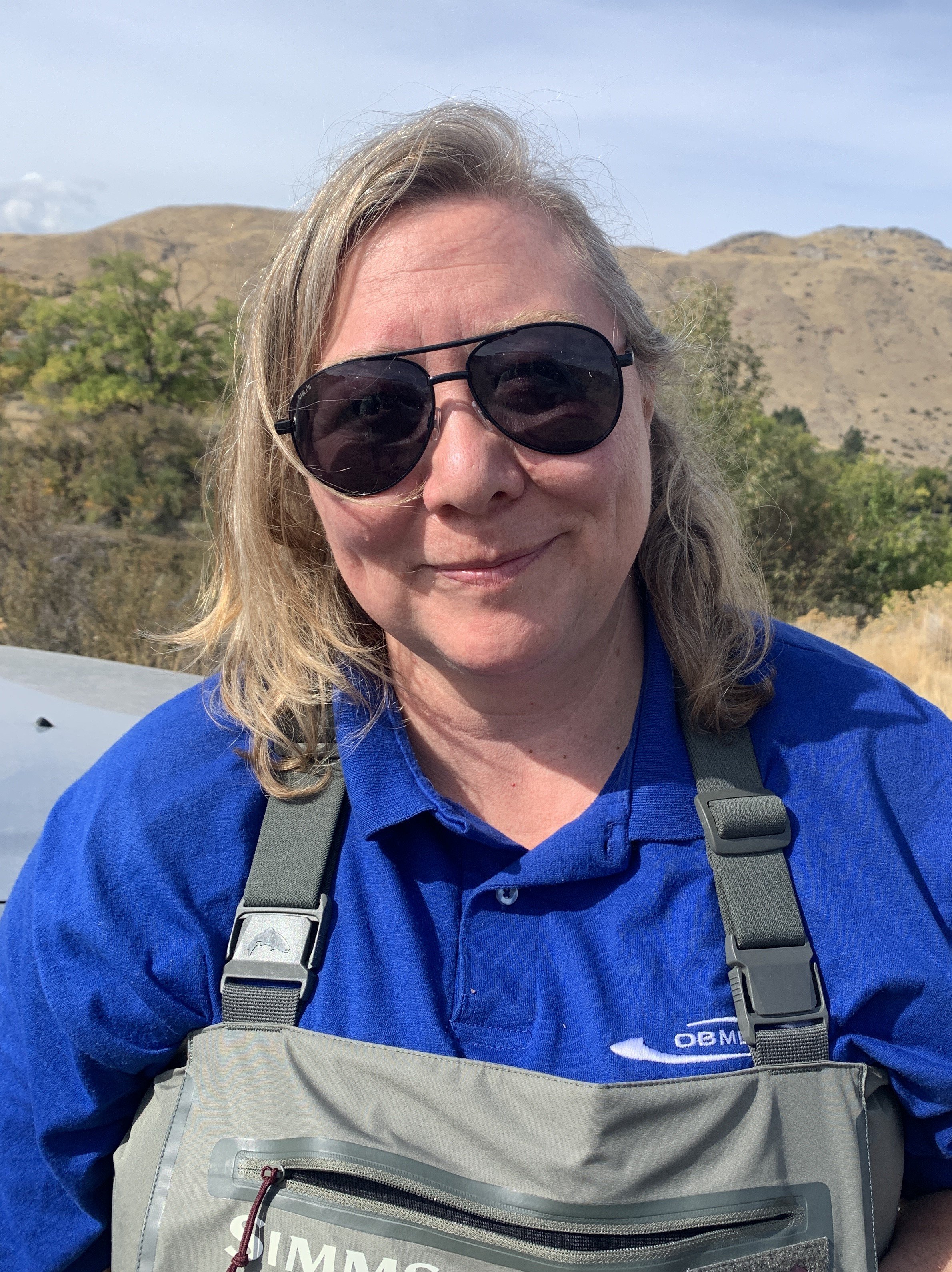
Speaker: Sonya Schaller
Sonya Schaller was born and raised in Omak and has been with the Confederated Tribes of the Colville Reservation’s Okanogan Basin Monitoring and Evaluation Program since 2011. She conducts habitat assessments, stream flow monitoring and GIS analyses. Prior to working in the Okanogan Basin, she worked for Whatcom Conservation District and the US Forest Service after receiving her BS in Botany from Western Washington University.
Speaker: Connor Church
Connor Church is a fish biologist for the Confederated Tribes of the Colville Reservation's Okanogan Basin Monitoring and Evaluation Program. He is conducting a steelhead egg to fry survival study in the Okanogan basin and also assists with mark-recapture electrofishing surveys, snorkel surveys, and spawning surveys. Prior to working in the Okanogan, he worked as a seasonal field technician for The Nature Conservancy, the U.S. Fish and Wildlife Service, and the U.S. Forest Service. He received a B.S. in Fisheries and Wildlife Management from Northern Michigan University, and an M.S. from the University of Missouri in Natural Resources.
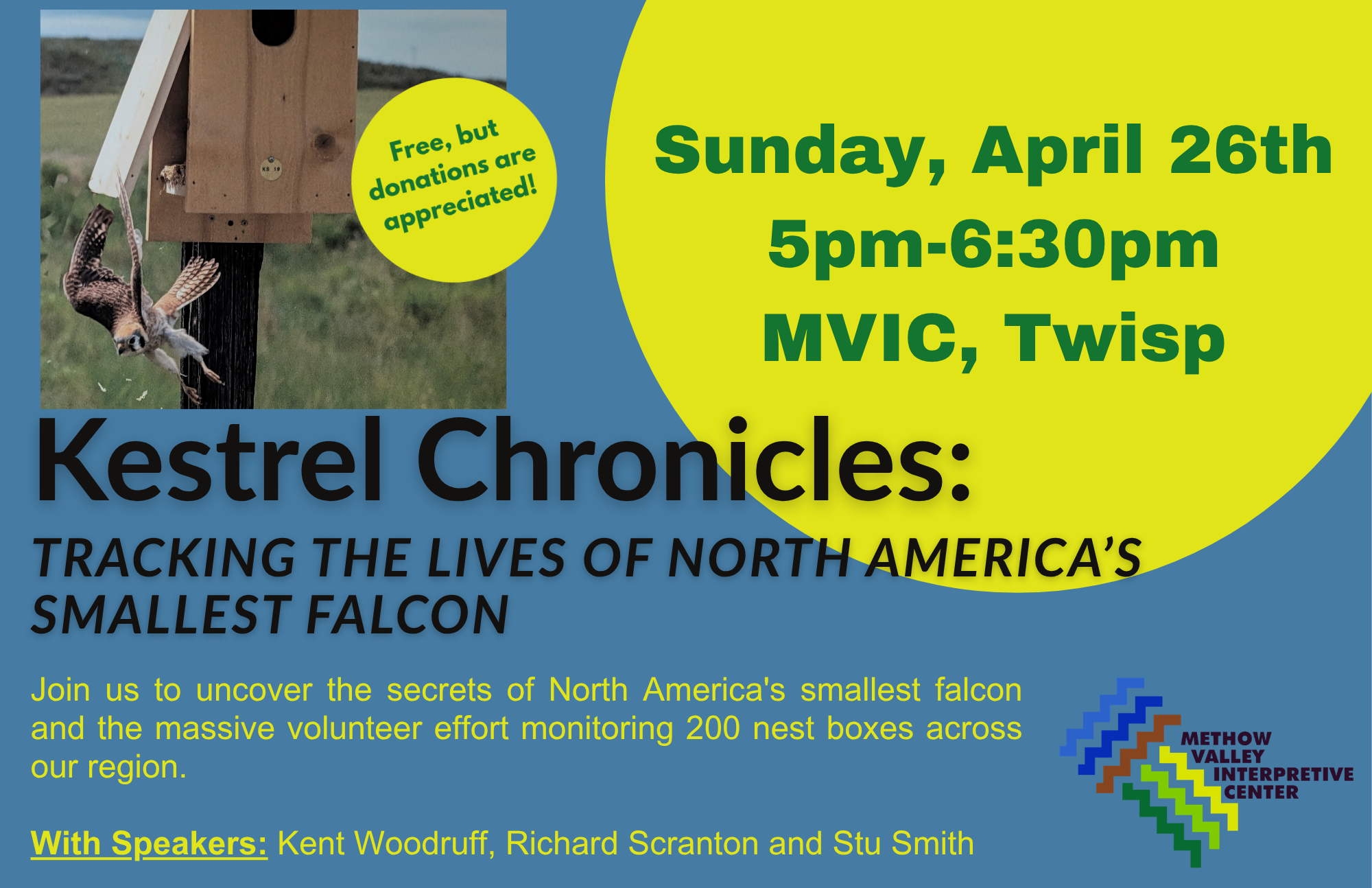
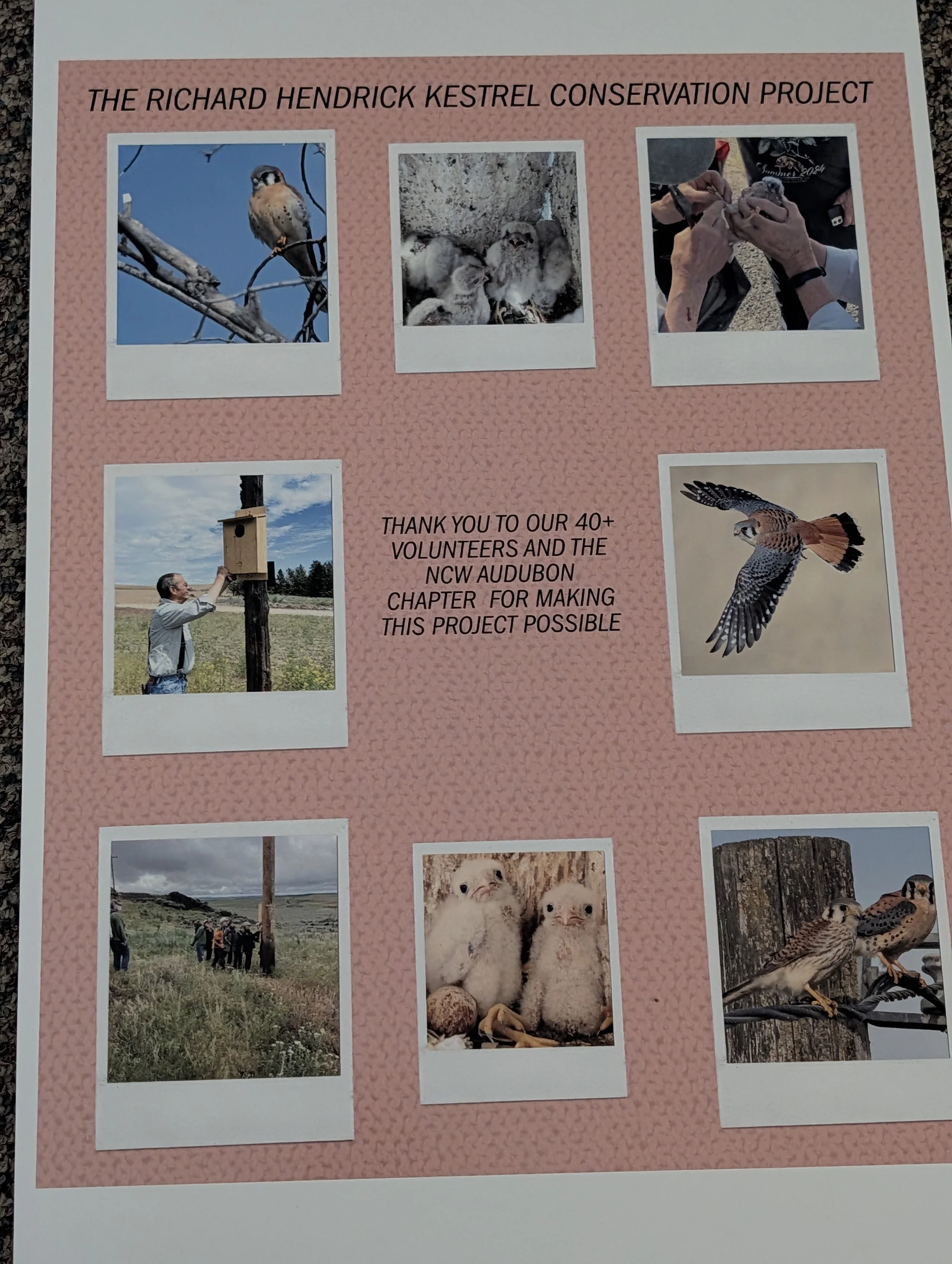
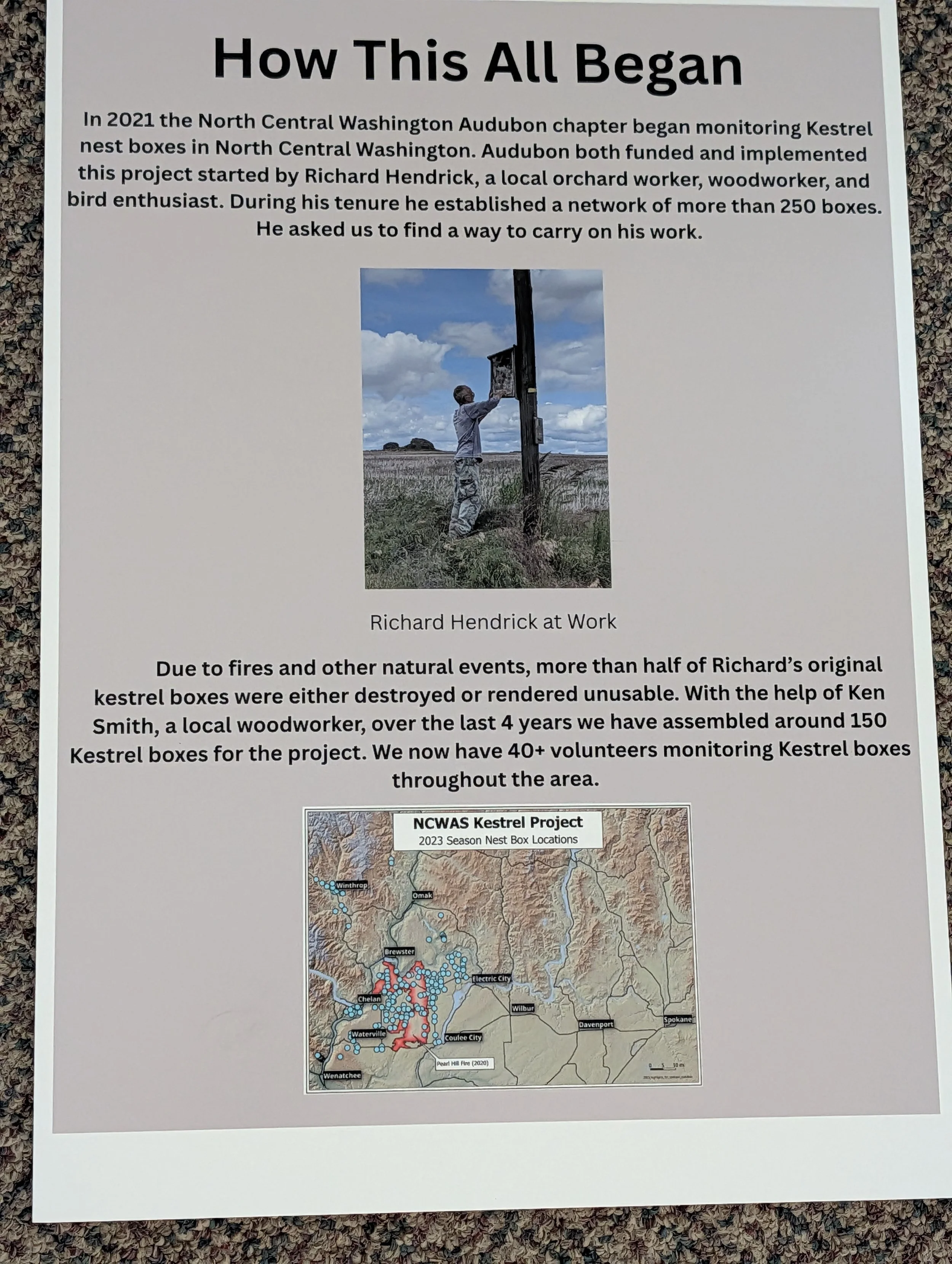
Kestrel Chronicles: Tracking the Lives of North America's Smallest Falcon
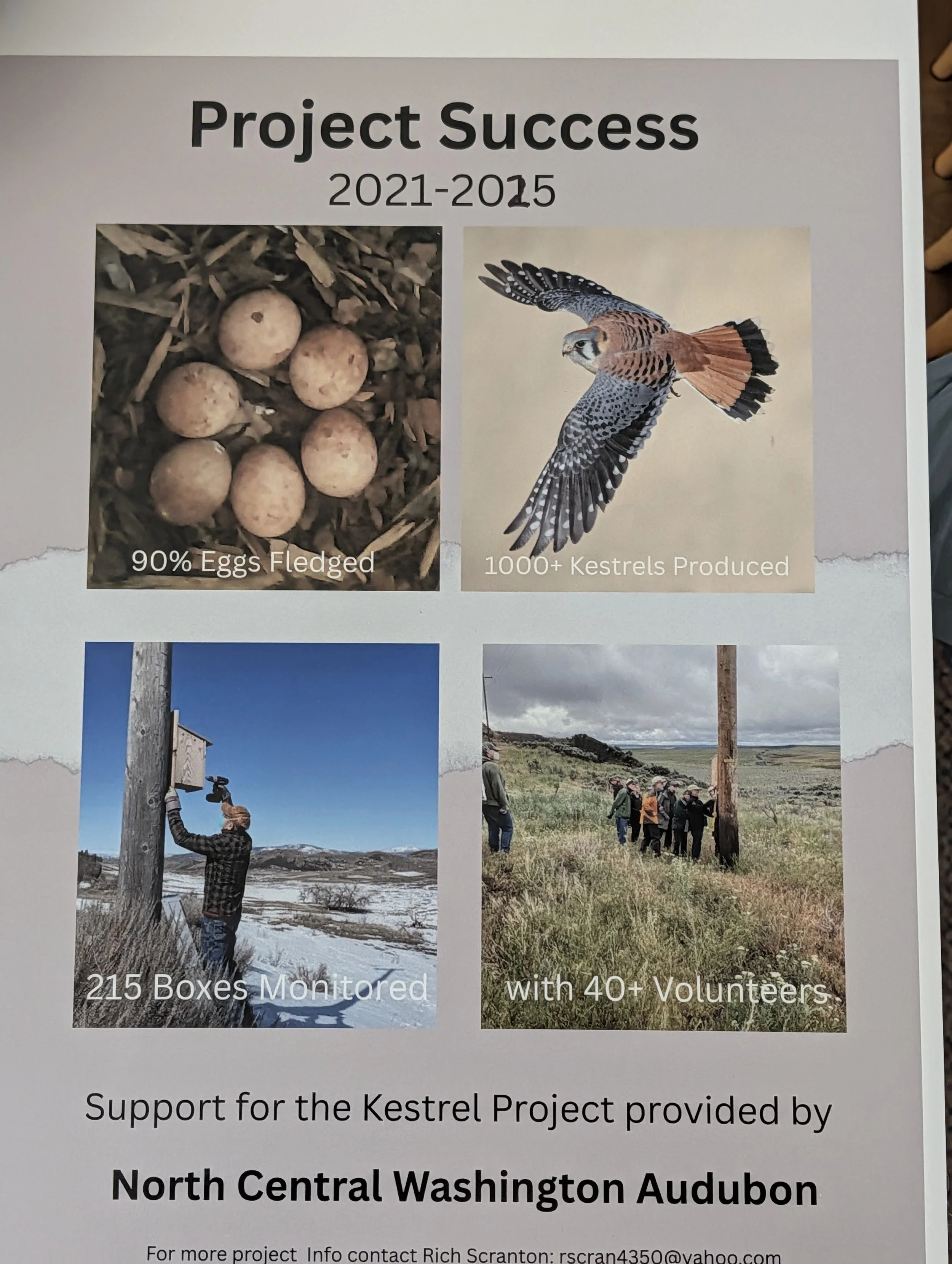
American kestrels are North America's smallest falcon. They are a daytime predator that feeds on small mammals, lizards, and grasshoppers. Often seen on telephone wires, they nest in cavities in trees, old buildings, and rock faces and are year-round residents in Eastern Washington. It's unclear how stable their population is in the state and that's something North Central Washington Audubon wants to investigate using the large nesting population here as subjects. This talk will describe the extensive volunteer project to maintain and monitor over 200 kestrel nest boxes and the things we have learned in the last 5 years of monitoring, as well as goals for the future.
Meet the Speakers:
Stu Smith is a retired Spatial Analyst, botanist, and former smoke jumper who contributes his GIS expertise to multiple conservation projects in Washington and beyond. He serves on NCWAS board of directors as data manager.
Richard Scranton is a semi-retired tree fruit research and development consultant. He was a gemologist in a former life and now serves as Conservation Science director for NCWAS.
Kent Woodruff is a retired US Forest Service biologist and local naturalist with a passion for birds, butterflied, bees, bats, and beavers. His friend Richard Hendrick was an avid birder who helped locate the first nesting peregrine falcons in eastern Washington in over 50 years and documented the first migrant broad-winged hawks at Chelan Ridge.
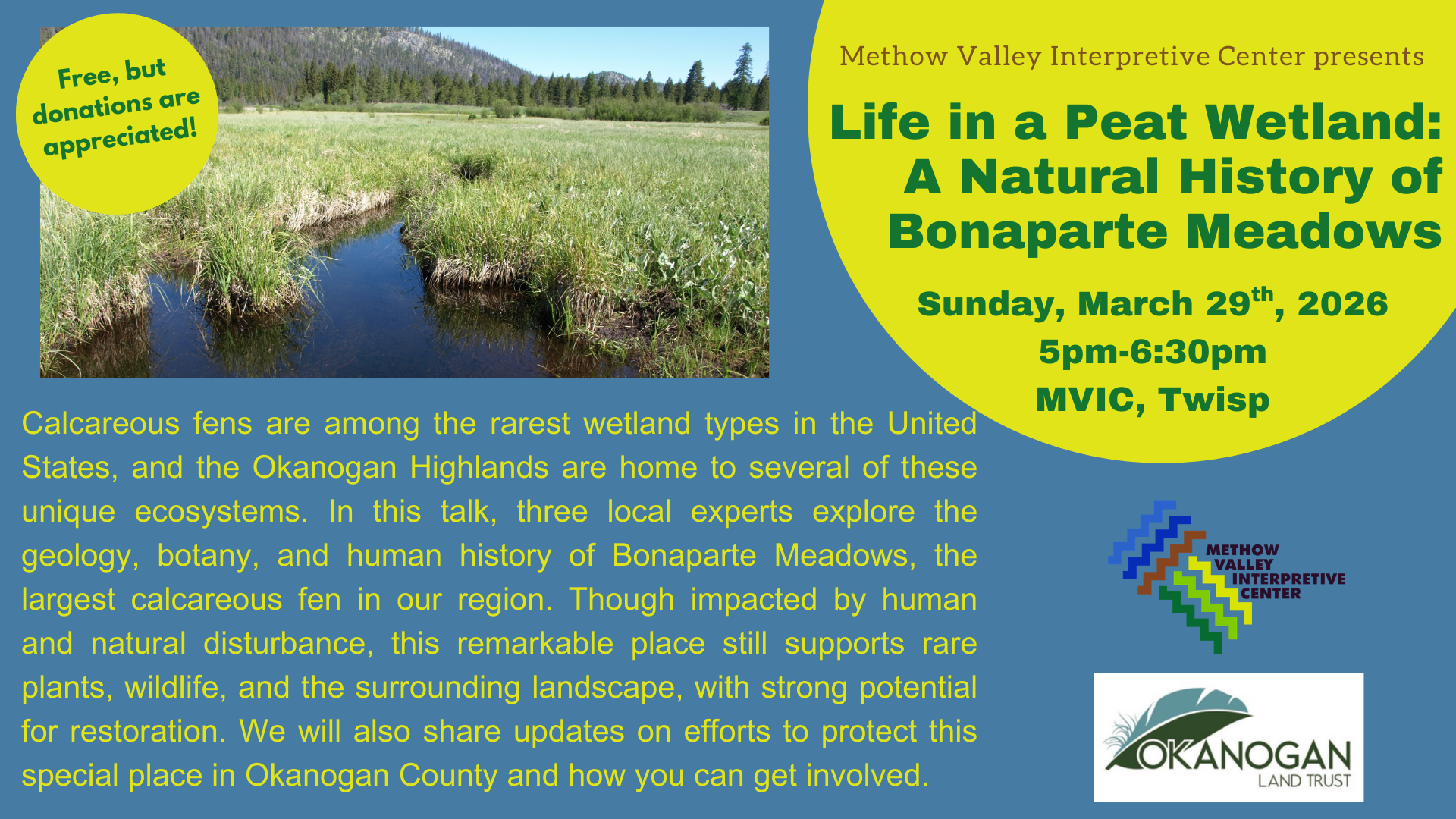
Life in a Peat Wetland: A Natural History of Bonaparte Meadows
Join Methow Valley Interpretive Center for a special presentation in partnership with the Okanogan Land Trust, on Bonaparte Meadows!
Calcareous fens are one of the rarest wetland types in the United States, and the Okanogan Highlands are home to several of these unique places. This talk — by not one but three local experts — explores the geology, botany, and human history of Bonaparte Meadows, the largest calcareous fen in our region. Although impacted by human and natural disturbance, this remarkable place still holds extraordinary benefits for rare plant life, for wildlife, and the surrounding landscape, as well as tremendous potential for restoration. In addition to the talk, we will share news about the campaign to protect this unique part of the landscape of Okanogan County, as well as the ways you can participate.
Meet the Speakers:
Julie Vanderwal is a Certified Ecological Restoration Planner based in Twisp.
Josh Wozniak is a professional wetland biologist with over 25 years experience delineating wetlands in the Puget Sound region and throughout the western US.
Dana Visalli is a botanist and editor of the Methow Naturalist.
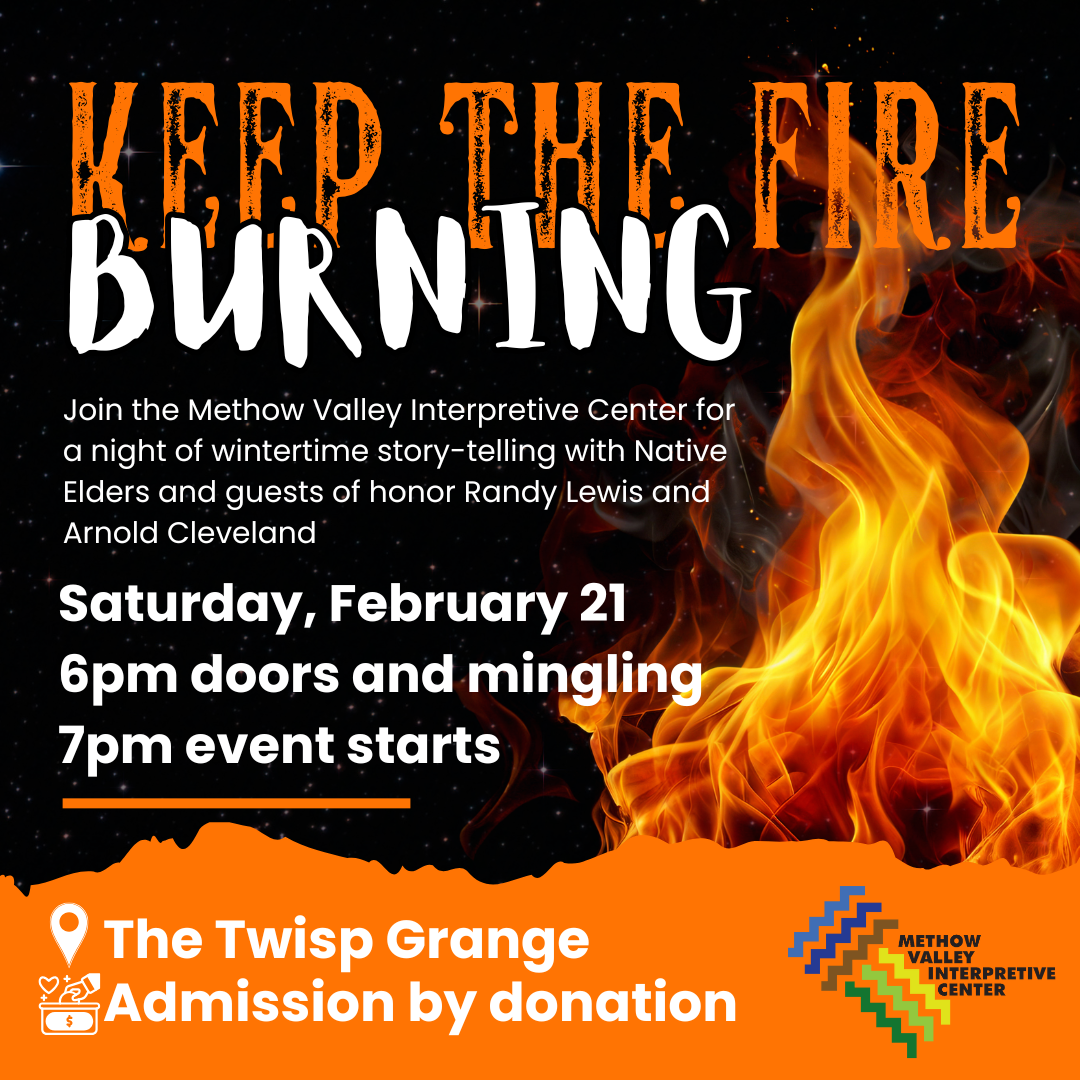
Keep the Fire Burning
Traditionally, in some Indigenous cultures, stories and teachings were shared around the fire during the cold, snowy months as a way to educate youth, pass on culture, and keep family history alive.
Join us Saturday, February 21st for a night of story-telling that you won’t want to miss! Our guests of honor will be Native Elders Randy Lewis and Arnold Cleveland. There might even be some musical surprises!
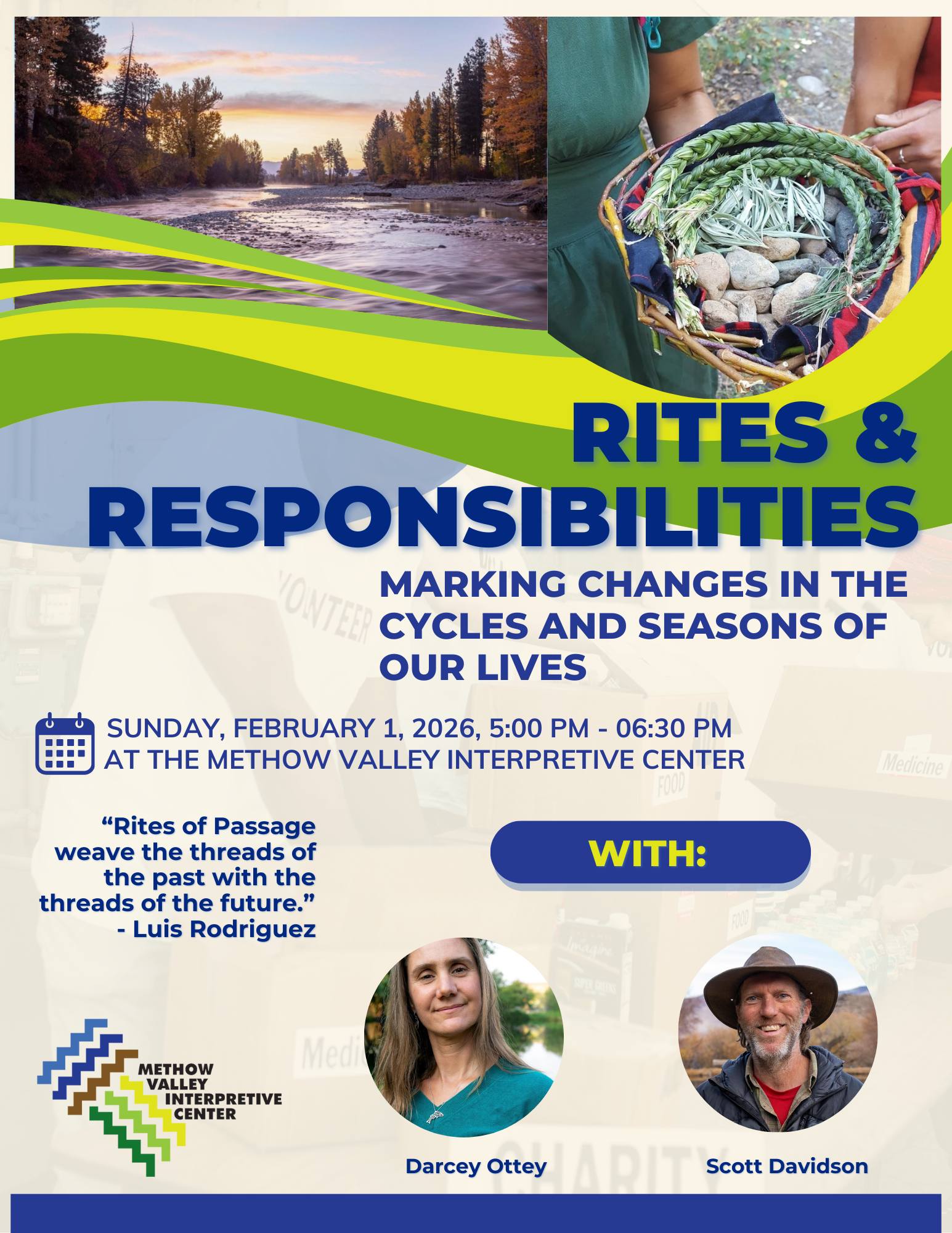
Rites & Responsibilities ~ Marking Changes in the Cycles and Seasons of Our Lives
A special community event at the Methow Valley Interpretive Center on Sunday, February 1st, from 5:00pm to 6:30pm. Feel free to come early for tea and a slice of midwinter cake if you’d like.

Formation of the Moses Columbia Reservation in 1879 and Implications for Today
Join the Methow Valley Interpretive Center for the last “Last Sunday” talk of the year. Historian and ethnohistorical expert E. Richard Hart will provide an historical understanding of the Moses Columbia Reservation, which encompasses nearly the entire homeland of the Methow Tribe, and what that means for tribal and non-tribal people today. Richard will also share insights into the end of treating making in the United States and subsequent court rulings.
Date: Sunday October 26, 2025, 5:00 – 630 PM
Location: Twisp Valley Grange, Twisp, WA
*Please note the location for this event! Our Last Sunday talks are usually at MVIC, but this one will be at the Twisp Valley Grange.
E. Richard Hart has provided historical, ethnohistorical, and environmental historical services and expert testimony for North American tribes. As the former Executive Director of the Institute of the North American West, he organized a number of influential conferences. He authored/edited twelve books, published more than fifty articles and essays, and presented more than fifty professional papers here and abroad. He has testified before the U. S. Congress on numerous occasions and served as an expert witness for Native American Tribes in Canada and the United States, the United States Department of Justice, for states, and other entities. He has received a number of distinctions and awards, including the 2012 Washington State Peace and Friendship Award. His papers form a Special Collection at the University of Utah’s Marriott Library.

The Nature Immersion Program Fundraiser
Mark Your Calendars!
Friday, Sept 27 at TwispWorks, come out and show your support for the Nature Immersion Program: A nonprofit dedicated to strengthening connection to the land and to one another through hands-on education and advocacy.
For the past 3 school years, MVIC has proudly served as Nature Immersion’s fiscal sponsor so that they could have access to grant opportunities. Now, as an independent 501(c)(3), they’re raising funds to continue empowering 6–12th grade Tribal, BIPOC, and underrepresented youth across the Colville Reservation and Okanogan County through ecological leadership and environmental stewardship.
The evening will feature live music, Native art, food, and a silent auction, all in support of this super-impactful program!